People can feel seasick on board all kinds of boats boats, yachts, cargo ships, and even gigantic cruise ships. Similarly, people can experience motion sickness when traveling in big motor vehicles such as vans, SUVs and buses, as well as when they fly on board planes, big and small.
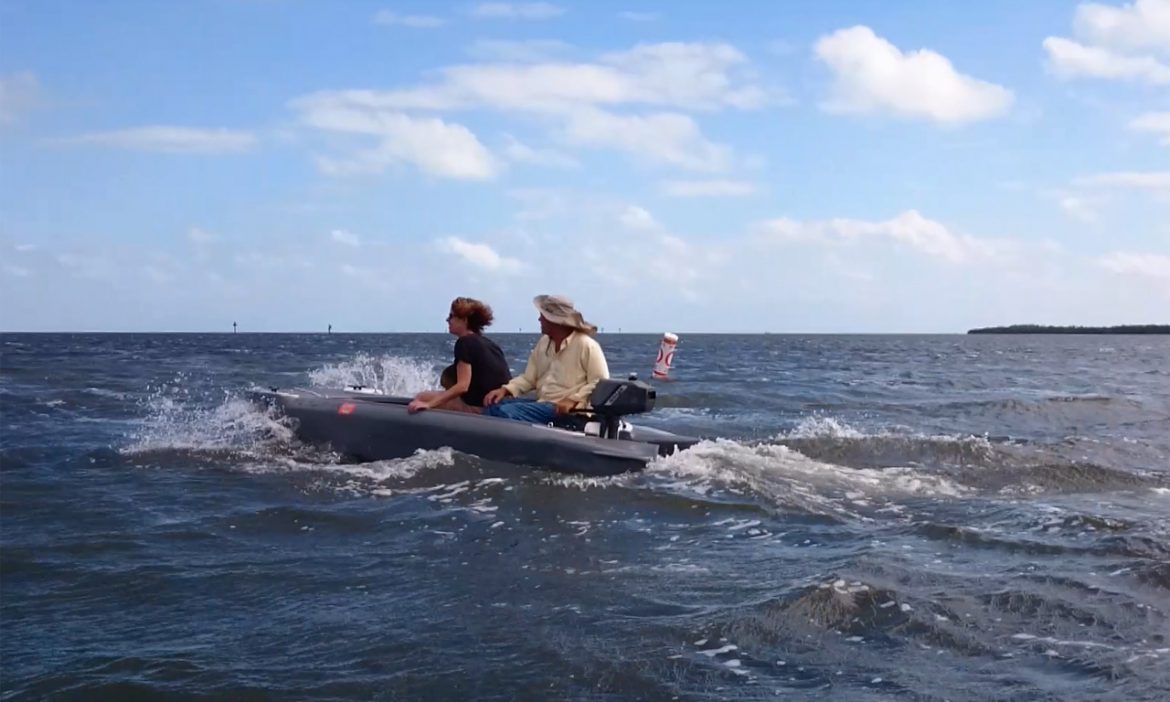
However, no one driving an S4 microskiff or traveling on board as a passenger can become seasick, even in rough seas.
How is this possible?
The simple explanation is that the feeling of not being in control of our own body while we’re being tossed around is what generates motion sickness. We’ll skip the neurological details, as well as the description of the structure of our inner ear and how it’s related to our sense of balance, and remind the reader that no one riding a motorcycle, an ATV, or a personal watercraft (PWC / jet-ski) experiences motion sickness, even in rough conditions, because all these small vehicles enable their passengers to travel seated in the Riding posture, with a foot on each side of a saddle, and thus enjoy the ability to balance themselves naturally, that is intuitively and effectively, and with a sense of being in control. It is being in control and feeling in control that makes the difference for people who go in these high-performance vehicles.
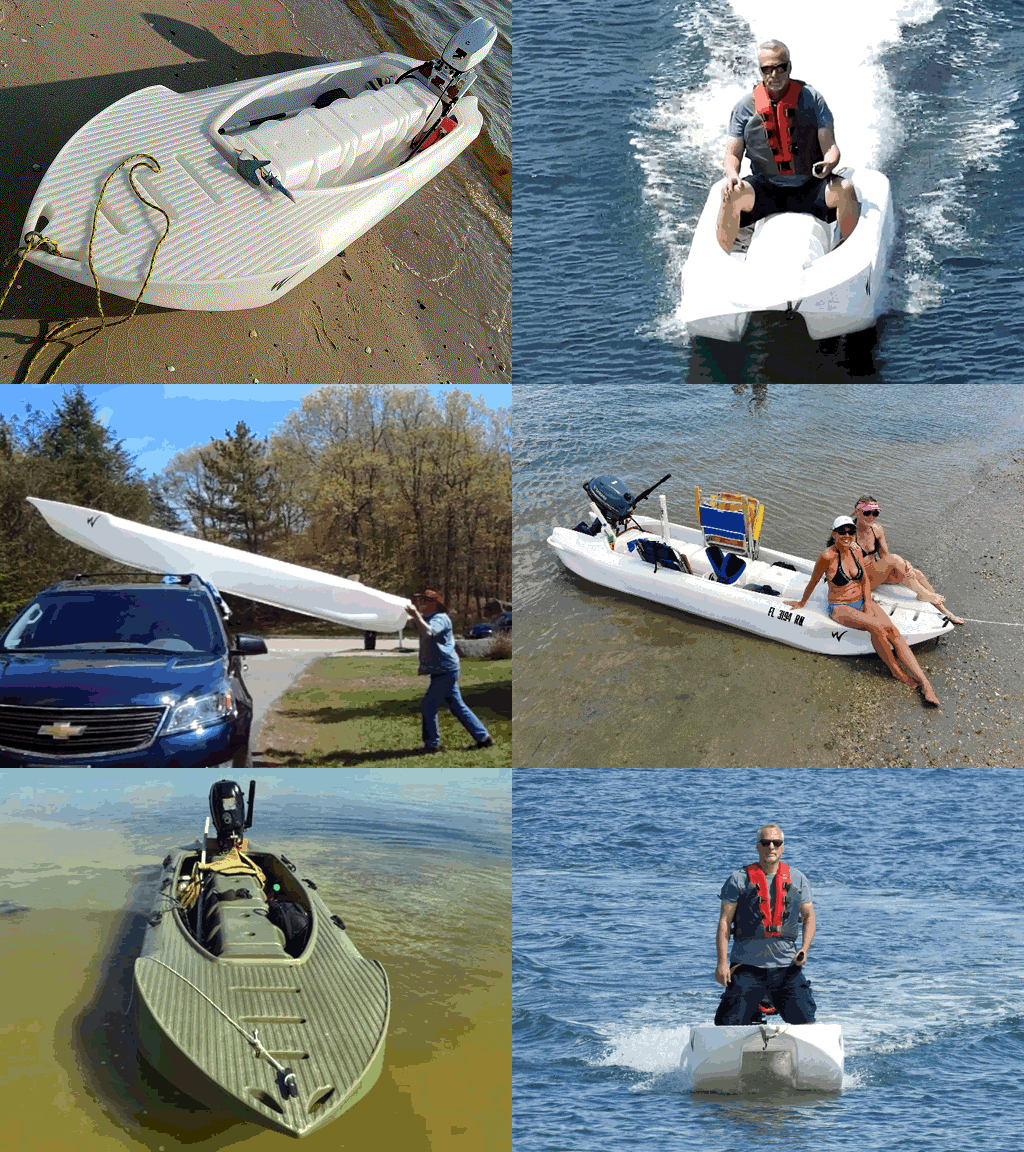
The Wavewalk S4 is a patented, high-performance watercraft that features a similar type of saddle seat as the above mentioned small-size, high-performance vehicles do. The S4 saddle combined with its deep catamaran, hulls offer the driver and passengers to ride in full comfort and confidence, with the ability to balance themselves intuitively and effectively, in full control of their body, even the chop. As a result, anyone going in an S4 will never experience seasickness while they’re on board.
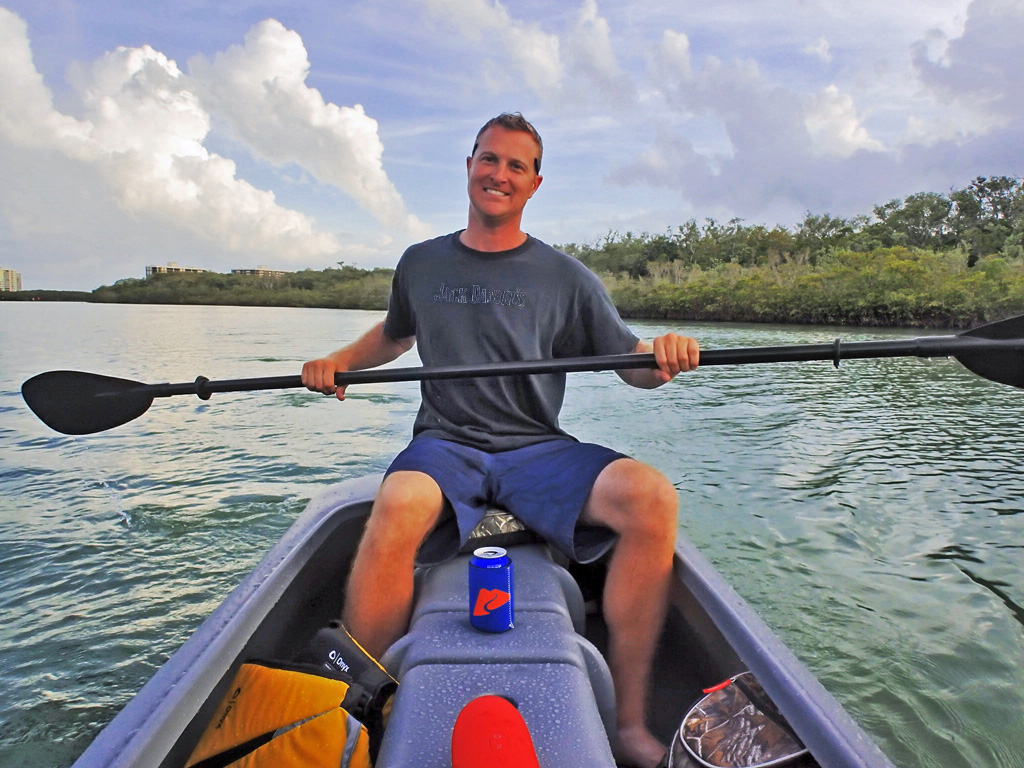
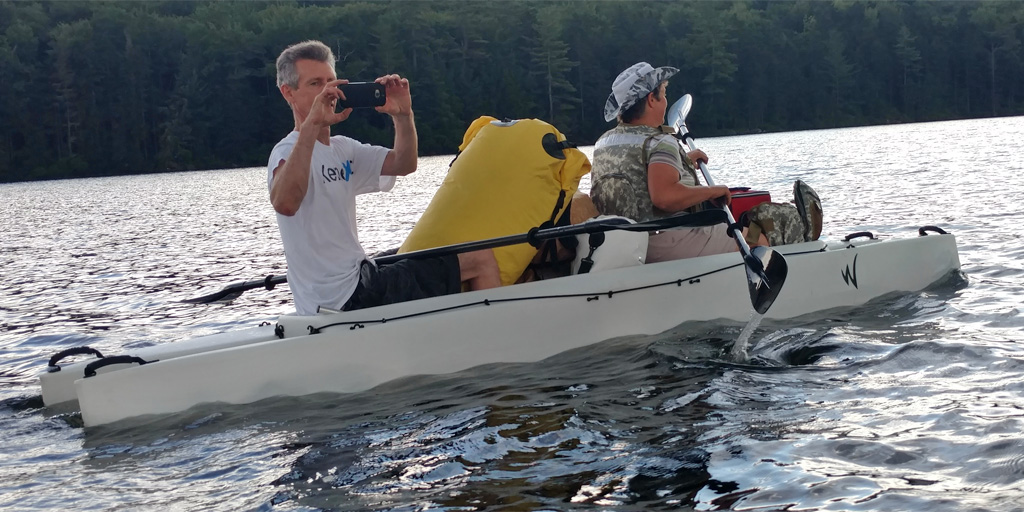
S4 passenger paddling while riding the boat’s comfortable saddle seat, with each of his legs in a different hull, and his feet solidly resting on the bottom.
And if you’re asking yourself whether the Riding posture can really be that effective in terms of balancing, watch this slow-motion version of a demo video of the W500, which was a smaller, earlier version of the W700:
Ironically, we tried to shoot a demo video of the same thing performed in an S4, but the visual result was much less impressive, since the S4 hardly budged, because it is so much more stable than the little W500.
How to cure seasickness on board a big boat?
If you’re staying on board your big boat, and a couple passengers happen to feel seasick, just lower your S4 tender into the water, and let these folks get inside and paddle or motorize around – Their seasickness will be gone in no time, and they will feel relieved.
After that, the only problem left for you would be to convince them to get back on board the big boat, but that’s a different story.
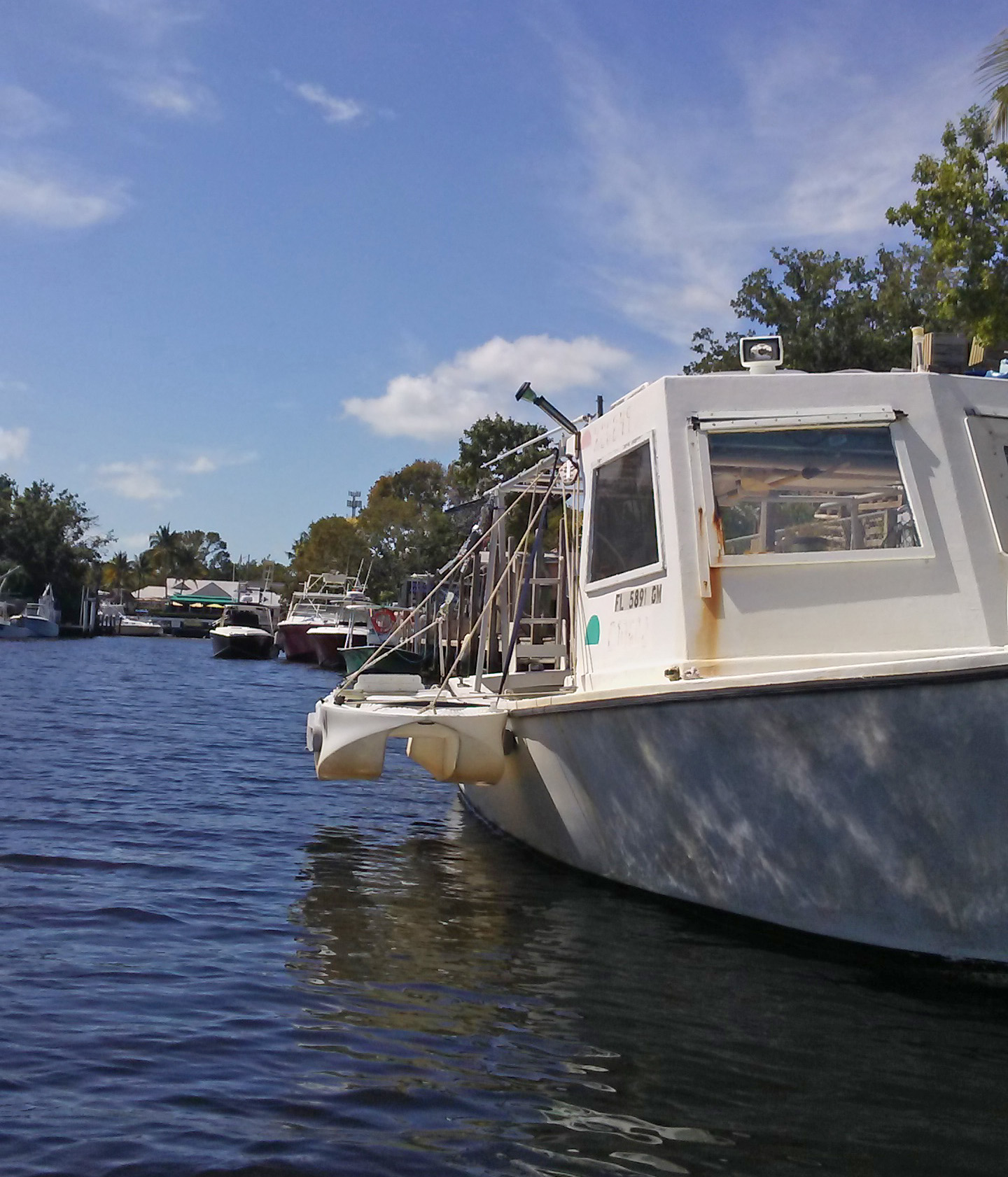
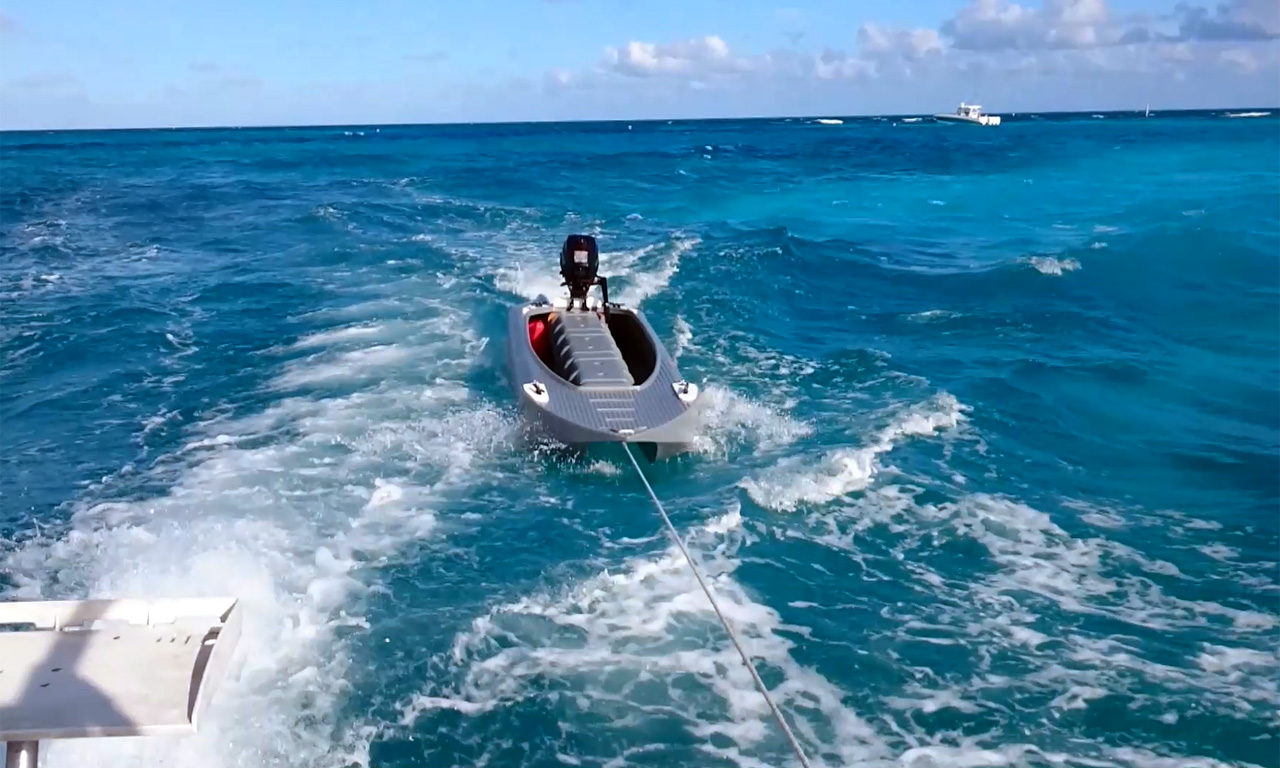
S4 tender attached to the side of the mother shipS4 boat tender towed by a big boat
This article compares fishing personal watercraft (PWC) to the Wavewalk S4 cat skiff in terms of the similarities and differences, and what they mean for anglers in various scenarios
Updated 08/24/2026
Fishing from Personal Watercraft (PWC) compared to fishing from the Wavewalk S4 Cat Skiff, and what the similarities and differences mean for anglers in various scenarios.
Versatility
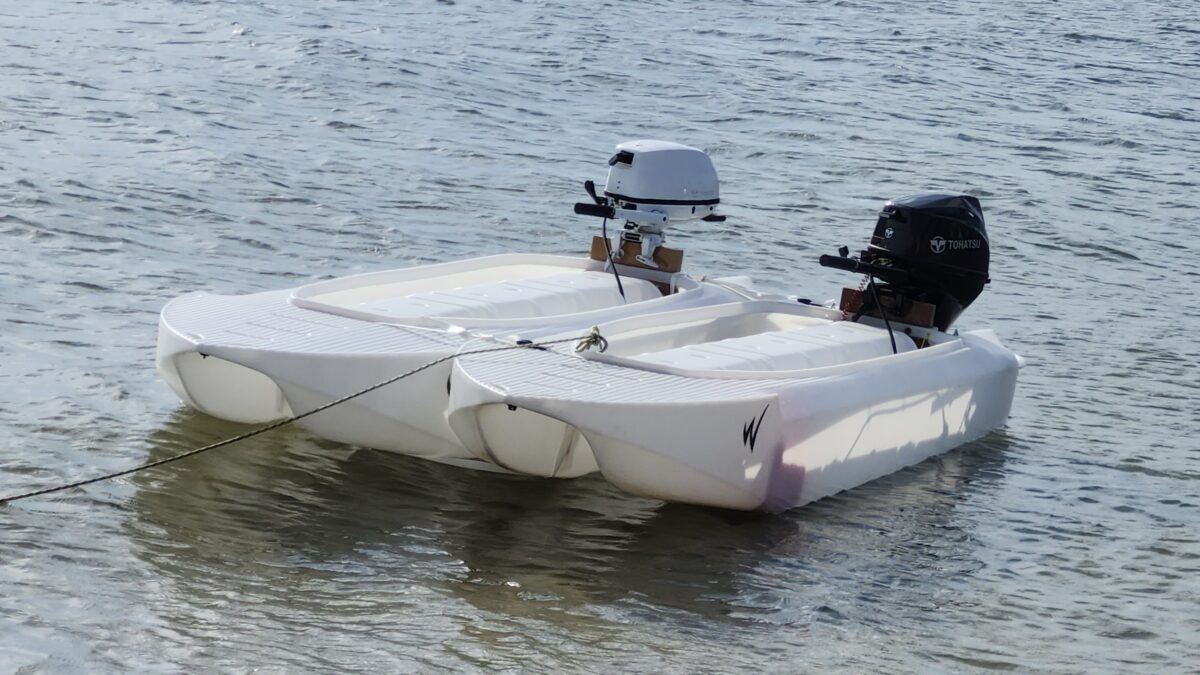
Common PWC are highly specialized high-performance boats, and they offer little to nothing in terms of versatility. The Fishing PWC is more versatile than a regular PWC because you can use it for touring and water sports, as well as fishing. But the S4 is far more versatile, since on top of these applications, you can use it for kayaking and canoeing, sailing, hunting and camping, and as a tender (service boat) for big boats and yachts. You can even attach two S4 side by side in the S4 Duo configuration, and enjoy the stability, comfort and performance of a large-size boat.
Saddle Seat
Both PWC and S4 feature a longitudinal saddle seat that their users straddle with a leg on each side.
Seat Length: The S4 seat is considerably longer than the longest PWC seat, and it allows for three adults to sit comfortably, and for two full-size anglers to fish comfortably. In contrast, the biggest PWC allows for two adults to seat next to each other, but not to fish at the same time.
Seat Width: The S4 seat is 12 inches wide at its base, while fishing PWC feature seats that are twice as wide at their base. Practically, a person of any size, big or small, can stand up with a foot on each side of the S4 seat, and be totally stable under any circumstance, namely in choppy water and while casting and fighting big fish. This is not the case with an angler standing in a similar position on their PWC, because their feet would be too far apart for their legs to provide enough stability when the PWC rocks and bounces on the waves and their hands are not holding the steering bar, or when a big fish challenges the angler’s ability to balance themselves. Fishing standing in such posture in an S4 is easy and intuitive, while fishing in a similar posture from a PWC is a no go, practically.
PWC Foot Wells vs S4 Hulls
The S4 hulls are 13 inches wide at their bottom, while fishing PWC feature foot wells that are much narrower. This means that unless your feet are extremely big, or you’re wearing big boots, you can comfortably sit side-saddle in an S4, facing its broadside, with your feet resting on the bottom of the hull, one next to each other, in parallel. You can also stand with both your feet in one of the S4’s hulls, if you feel like it. You can even turn around yourself while standing in one of the s4 hulls, as demonstrated in a video. But none of these things is possible in a fishing PWC, simply because its narrow foot wells don’t offer enough room for a person’s feet to rest in parallel to each other. You can sit side-saddle in a PWC, facing its broadside, but your feet would have to rest on top of the foot well’s exterior wall, which is higher than its bottom. The only way to stand in relative comfort on one side of a PWC is with one foot resting on the bottom of the foot-well, and the other resting on top of its wall. Comfort is relative, and standing this way for a long time is not ergonomic.
Fishing Standing
The S4 offers three stable and comfortable positions for stand up fishing:
Straddling the saddle with a leg on each side
Standing with both feet in one hull
Standing on the front deck a.k.a “Casting Platform” in skiff terms
In contrast, the fishing PWC limits anglers to fishing in one standing position that’s less than optimal in terms of stability and comfort, as described in the previous “PWC Foot Wells vs S4 Hulls” paragraph. The fact that an angler fishing from an S4 stands on the bottom of the hulls, while an angler fishing from a PWC stands several inches higher, on the top of the foot wells, is noteworthy, because standing lower is yet another factor that makes the S4 angler more stable for its users.
Tandem Fishing
The S4 offers enough room for two large size anglers to fish from in full comfort and wit no restrictions at all, even in the ocean, and wit both anglers standing up. On flat water, the S4 can accommodate up to three adult anglers, if they get along with each other really well. In contrast, the fishing PWC is a solo fishing boat, no ifs and buts.
Portability – Carrying and Transportation
Carrying: The S4 weighs 100 lbs, and with a 6 HP outboard attached to it, it weighs a total of 160 lbs. One person can drag an S4 to the beach and from it, and two guys can lift it and carry it over short distances, whether assembled or disassembled. The fishing PWC is a large size model that weighs 850 lbs, and there is no way to move it anywhere on land unless it is attached to a trailer that’s towed by a motor vehicle.
Transportation – One person can cartop an S4 on a roof rack attached to any vehicle, big or small, transport it inside a large size minivan or SUV, or on the truck bed of a pickup truck. None of these options is even remotely possible with a fishing PWC, and the only way to transport it is on a trailer.
Load Capacity
Both the S4 and the fishing PWC have the same maximal recommended load capacity of 600 lbs. This said, in the case of the S4, this number includes the outboard motor, and a 6 HP outboard motor weighs about 60 lbs.
Mobility
Shallow Water I – Draft: When it comes to boats, shallow draft is the holy grail of shallow water fishing, and water jet engines makes PWC draft less than boats of comparable size that are powered by outboard motors, since the latter’s real-wold draft is determined by how deeply submerged the outboard’s propeller is. But a fishing PWC weighs 850 lbs, and the S4 weighs just 160 lbs, so when push comes to shove, they draft about the same, especially since most small outboards offer a shallow water position that reduces their draft by a couple inches.
Another issue to consider is that water jet engines are prone to get jammed by vegetation, small rocks, pebbles, and other underwater objects tat get sucked into them, while the simpler design of outboard motors makes it easier for their users to cope with such situations, so that practically speaking, the S4 drafts less than a fishing PWC. For more information, see “Shallow Water II – Launching and Beaching” section below.
Shallow Water II – Paddling and Poling: Imagine you’re fishing the flats at high tide, and as the tide goes out, the water around you gets too shallow for your boat to go back to open water. In other words, you’re stranded. But are you really? The S4 is designed to offer full paddling functionality, as well as poling, and all you have to do in order to turn it into a kayak or canoe is raise the outboard’s propeller above the water, grab you paddle, and start paddling. With the propeller out of the water, the Wavewalk S4 drafts so little that you’re pretty much guaranteed to be able to reach water that’s deep enough for you to lower the propeller and go back to driving. And worse comes to worst, and the water got so shallow that even paddling and poling don’t work, you can simply get out of your S4, and drag it behind you while you walk towards deeper water.
Shallow Water III – Launching and Beaching: You can launch and beach an S4 anywhere, including rocky beaches dubbed “Rock Gardens”, as seen in the next video, and usually, you can start your outboard motor in water that’s as shallow as 1 ft. – Needless to say that such feats are impossible with PWC, which are restricted to launching and beaching at boat ramps, or in beaches that allow safe access to motor vehicles and boat trailers.
More importantly, PWC manufacturers warn their clients to make sure they have at least two feet of water underneath their craft before starting it, because it will save them costly and time-consuming repairs.
Storage
The S4 offers about ten times more on-board storage space than a fishing PWC does. This means that the S4 works better for trips involving more than one person, camping trips, diving, spear-fishing, and any activity that requires carrying a lot of bulky equipment on board.
Cost
Cost of Purchase: The S4 goes for about $3,000, and a new 6 HP outboard motor goes for $1,500. You don’t necessarily need a trailer to transport your S4, so your total cost for it is less than $5,000. Compare this to the cost of a PWC fishing model that starts at $15,000 (three times more…) and add the cost of a trailer, and the advantage of owning an S4, or even a pair of them, becomes clear.
Cost of Ownership: Servicing the 150 HP engine of a PWC is considerably more expensive than servicing a 6 HP outboard motor.
Trim
The S4 design is basic, in order to make it lightweight and inexpensive. In contrast, fishing PWC are high-end small craft and they come with a sophisticated trim, and all sorts of bells and whistles. A fishing PWC may look more classy, but you’ll get more looks, questions, comments and thumbs up from other boaters when you drive an S4.
Seaworthiness
Driving an S4 in 2-3 ft chop can be fun, especially standing, but this catamaran microskiff is not as seaworthy as a PWC.
Speed
Fishing PWC are equipped with a 150 HP engine, and they can reach a top speed of 45 mph. In contrast, the S4 is rated for 6 HP, and some owners run a 10 HP outboard on it.
The purpose of this article is to explain the basic terms and facts related to Kayak Touring in order to enable the reader to make informed decisions when choosing a touring kayak.
GUIDE TO SENSIBLE KAYAK TOURING
Touring in the W720 Catamaran Kayak
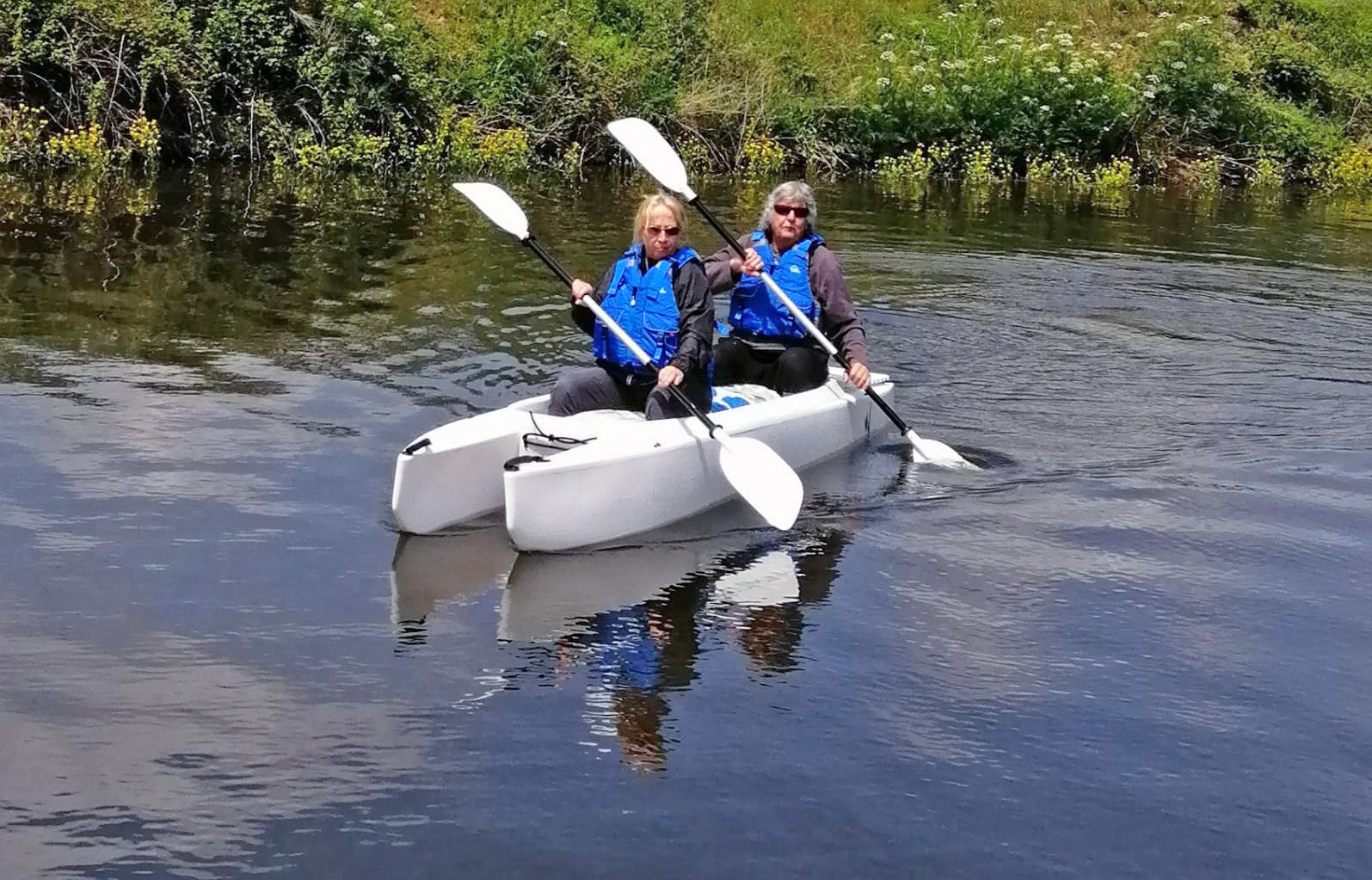
Whether used as a solo or a tandem touring kayak, the patented Wavewalk 720 catamaran kayak is unique in what it offers, including unrivaled stability, enhanced safety, true comfort even for people with back problems, perfect tracking with no need for a rudder, highest versatility, utmost mobility (launch, go and beach anywhere), best portability (4 carry handles), and a huge storage space that redefines what’s possible in camping and expedition style touring.
The W700 is so stable that anyone can paddle it standing, even a 6’4″ tall, 300 lbs elderly guy – Watch this video »
One person can easily cartop a W700 on any roof rack – No kayak rack needed.
On top of this, the W700 is the only kayak that can be easily and effectively motorized, which adds another dimension to the safety, range of travel, and ease of use that it delivers. And BTW, if you happen to like single-blade (“canoe”) paddles, the W700 tracks better and is more comfortable than any traditional canoe out there.
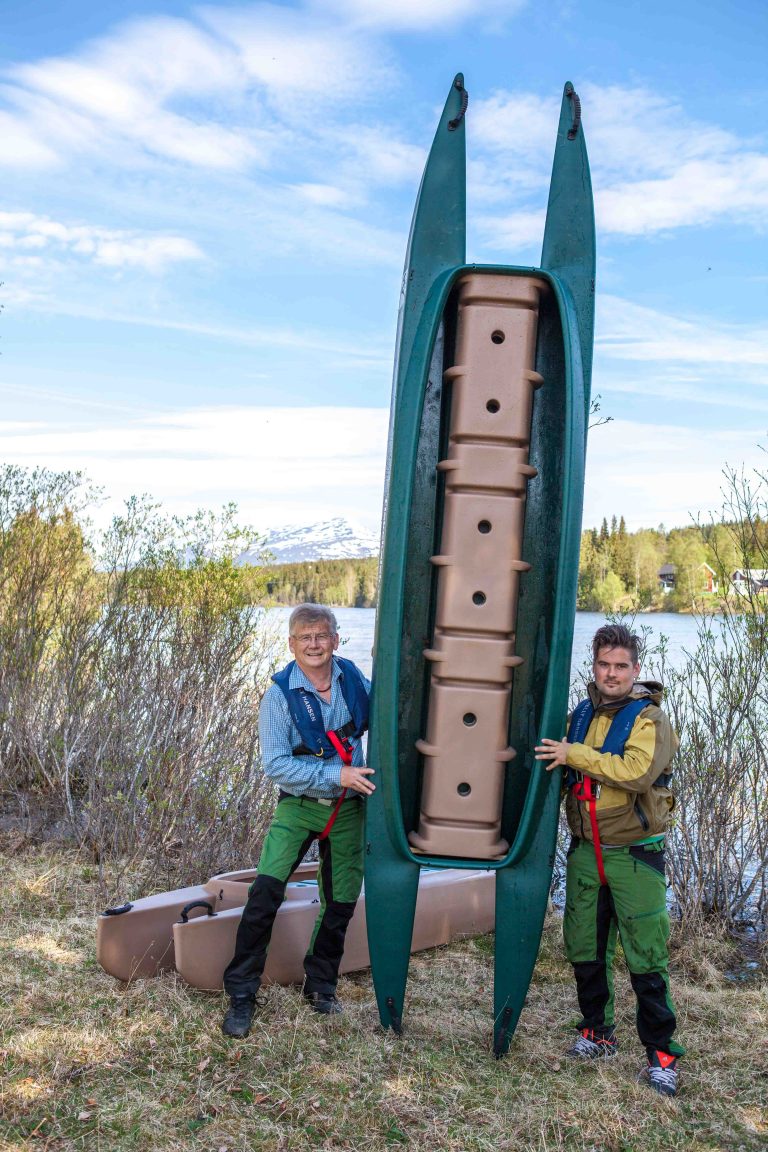
Two Swedish kayakers holding their 12’10” long W720 tandem kayak. This photo shows how lightweight this kayak is (80 lbs), how spacious its cockpit is, how comfortable the longitudinal saddle seat is, and the huge on-board storage space available for camping gear, photography equipment, fishing tackle, etc.
Things To Know And Consider When Choosing A Touring Kayak
The purpose of this article is to explain the basic terms and facts related to Kayak Touring, in order to enable the reader to make informed decisions when choosing a touring kayak.
What is Kayak Touring?
Kayak Touring is a recreational paddling activity involving one or more kayakers going on medium to long range trips on freshwater and/or at sea. Typically, kayak touring does not include traveling in whitewater, fishing and hunting, but it is sometimes combined with going in rapids, waves and currents, camping, bird watching and wildlife photography.
A Touring Kayak is a kayak designed for one or two kayakers (tandem) going on kayak touring trips.
Compared to other kayak types, touring kayaks are designed for average to high speed.
1. A Brief History Of Kayak Touring
1.1 The Origins Of kayak Touring
Native peoples of the Arctic Circle used kayaks for touring expeditions for hundreds and possibly thousands of years before kayak touring became a recreational activity sometime around the beginning of the twentieth century. Their custom sit-in kayaks were hand crafted, and already had the basic design of modern days touring kayaks except for the fact they featured no kayak seat, rudder or hatches that were introduced only in recent decades. Some of the native kayaks were narrow and designed to be easily rolled in case of capsize, and others were wide enough to offer sufficient stability for a native kayaker. It is important to note that native kayakers were considerably lighter as well as shorter than the average, modern North American paddler. On top of this, native kayakers practiced kayaking for long hours since early childhood and were in most cases more athletic and in better physical shape than the average North American touring kayaker. Such differences in stature, weight and skills have a critical effect on essential issues ranging from safety to comfort, recovery, speed, tracking and maneuvering etc.
1.2 The Beginning Of The Kayak Touring Era
Canoeing became popular among settlers in North America, who adopted various native canoe designs for touring the continent’s waterways as well as for transportation of people and goods. Kayaks remained unused because canoes had the advantage of having a greater load capacity and were easier to paddle with a crew of two or more passengers. Sometime after the middle of the nineteenth century trains, motorized boats and later trucks and cars made canoes obsolete for utility touring, but at the same time people began to have more free time and disposable income, and began paddling canoes instead or rowing boats as a popular recreational, outdoor activity. Kayaks were accepted as mainstream recreational paddle crafts starting in the sixties, as the new American society became increasingly centered on the individual. For this matter, the kayak had the advantage of being easier to handle and propel by a single passenger than a canoe is. It is then that the traditional sit-in kayak design was hybridized with the paddle board and the first sit-on-top (SOT) kayakcame to this world. Gradually, with the evolution of the consumer society it became fashionable to own a touring kayak, similarly to owning other individual recreational equipment such as a pair of name brand skis, a set of golf clubs or the latest model of fancy bicycle.
1.3 The Roaring Nineties
This trend reached its peak during the second half of the 1990s, as the soaring stock market coupled with the boom in Information Technology markets made it easy for urban professionals to buy increasingly expensive recreational sporting gear. It is during that period that expensive touring kayaks hand made from new, fiber reinforced plastics (FRP) became fashionable, and many small and medium size touring kayak manufacturing businesses thrived. This trend was equally fueled by the natural tendency that people have to compare the gear they’re using, and to assume that the more expensive the kayak the better it is. It is in this brief half decade that many kayak touring clubs were founded and many paddle shops got into the business of selling touring kayaks.
1.4 Kayak Touring Today
Things have taken a downward course around the 2001 depression, and a new era in kayak touring has begun. Some called the beginning of this new trend the ‘Touring Kayak Meltdown”, and it reflected a number of developments – The first being a considerable drop in sales of expensive touring kayaks and at the same time a rise in sales of low-cost recreational kayaks. The second is a decline in participation in kayak touring activities such as club tours, and a rise in recreational kayaking activities including rentals, non organized short trips and kayak fishing. The difference between the trend setting kayaks in the nineties and the trendy kayaks today is not only in price and materials (rotationally molded polyethylene being the most popular material today), but also in the basic design concepts. The typical touring kayak used to be a very long, very stiff (I.E. brittle) and very narrow sit-in kayak. These attributes served the purpose of enabling higher speed and practicing the Eskimo Roll. In comparison, today’s typical touring kayak is shorter, wider and roto-molded I.E. not as rigid as an FRP (‘composite’) kayak, and it’s as likely to be a sit-on-top as it is to be a sit-in kayak. As for the sit-in concept, most of these modern kayaks are very wide and not used with a spray skirt since they are not intended to be rolled.
2. Categories Of Touring KAYAKS
Expedition Kayak – For long range trips of many miles and several days or more. This type of kayak touring is the most demanding from both kayak and kayaker. The kayak needs to be solidly built and gig enough to store the gear and provisions required for a long trip. Because of its size a weight it should be stable enough to minimize the need for rolling. Expedition kayaks are the biggest touring kayak as far as length is concerned, and they can be longer than 20 ft.
Sea Kayak – For Sea Kayaking on very large bodies of water (E.G. Great Lakes, Ocean) in a group of at least two kayakers. Typically, sea kayaking trips are not longer than one day. The sea kayak is required to be fast enough for its user to keep in pace with the other kayakers in the group. As for the actual seaworthiness of such boats, the reader is welcome to read the article ‘Are Sea Kayaks Seaworthy?‘. Sea kayaks are very long, somethomes over 20 ft, and typically very narrow, and their users must outfit them with spray skirts.
Tripping Kayak – For long journeys, mainly on rivers and lakes. The tripping kayak is required to be strong enough to withstand the hardships of going down rapids, multiple beaching on rocky shores etc. It also has to offer sufficient load capacity for gear and provisions.
Touring Kayak – A kayak designed for paddling over longer distances, usually in groups and sometime for more than one day. Touring is often combined with other recreational activities such as camping, photography, bird watching etc. Touring kayaks include a broad range of designs that are generally faster than whitewater, surfing and recreational kayaks and slower than racing kayaks.
Day Touring Kayak – A kayak for leisure kayaking trips shorter than one day. These kayaks are typically shorter and wider than expedition kayaks and sea kayaks.
Recreational Touring Kayak – A kayak that offers leisure paddling limited to short trips in both time and distance terms. These kayaks are shorter and typically wider than other touring kayaks, which makes them slower too.
3. The Touring Kayak Design
The touring kayak has to fulfill a number of sometime contradictory requirements of which the two essential ones are safety and comfort. Next come speed and maneuverability, which are important as well but not critical. Load capacity and storage come last and their importance is reduced if the kayak model is designed for shorter trips and calmer waters, as most touring kayaks are nowadays.
3.1 Safety
This is obviously the most critical requirement, and it is a complex, multidimensional one.
The first thing that comes to mind when discussing kayak safety is the ability of the kayak to protect its passenger from dangers including drowning, injury, exhaustion, hypothermia etc.
For example-
A kayak with too little free board might eventually fail to prevent water from getting inside the cockpit. In extreme cases the extra weight might impede and even sink the boat, and in cold water and weather it could cause the passenger severe discomfort, exhaustion and even death as a result of hypothermia.
A kayak that’s too narrow to offer sufficient lateral stability to its passenger is prone to being overturned by external forces such as waves, boat wakes etc., or as a result of an accidental error made by the passenger in a moment of inattention.
The paddling community is divided between the traditional, small and diminishing minority of those who see the Eskimo Roll as the ultimate recovery method and an already overwhelming and growing majority of those who prefer to paddle wider, more stable boats than increase the risk of capsizing by paddling narrow ones.
A kayak that does not offer sufficient legroom and good ergonomics will cause its passenger to suffer from discomfort, fatigue and sometime exhaustion. Such kayaks often cause cramps in the legs and thighs, leg numbness and back pain that could lead to serious boating accidents. In the long run uncomfortable kayaks might cause lasting back injuries.
A kayak designed for high speed and therefore made from very lightweight and rigid materials such as carbon fiber is also more brittle than a kayak molded from polyethylene, and might develop cracks when hitting rocks or ice. Needless to say, that a cracked hull in cold water can be fatal. Unfortunately for passengers of such kayaks, the colder the temperature the more fragile the hull becomes.
These examples show how the requirement for additional speed might reduce both the kayak’s mobility and safety.
In this context it is appropriate to stress that designs and techniques that were perfectly acceptable and useful for native kayakers are no longer practical for most modern non-professional kayakers – including those who think otherwise.
3.2 Ergonomics and Biomechanics
These subjects are already discussed in depth in another article called ‘Biomechanical and Ergonomic Solutions To Modern Kayaking’ (Article).
In essence, when choosing a touring kayak it is useful to remember the following points:
You are going to spend many hours at a time in this kayak, and what may seem comfortable to you in the first fifteen minutes of paddling might turn to be a nuisance and sometime a source of pain after an hour or two, and it may even cause back injuries over longer periods of time.
3.3 The Kayak Seat
This is a modern-days accessory that native kayaks did not feature. Kayak manufacturers introduced it as a support for the kayaker’s back in order to prevent it from ‘falling’ backwards as a result of sitting in a position that’s not appropriate for people who are no longer used to sitting on the floor, that is nearly all of us Westerners.
But the seat has not solved the ergonomic problem at its root- it just changed the symptoms: Now the supporting structure itself I.E. the seat’s backrest created a pressure point in the kayaker’s lower back, and while generous cushioning may dissipate to a certain level and postpone the discomfort it certainly does not eliminate it.
In fact, the kayak seat created a second problem, which is the lack of sufficient support for the kayaker’s feet: Instead of the back ‘falling’ backward the feet are ‘sliding’ forward, which is why they require a rigid, vertical accessory to stop them, and that’s what the foot rests or foot braces effectively do at the cost of increasing the pressure on your lower back.
And while the kayak seat has become standard in all commercial kayak models because without it hardly anyone would be able to paddle them, it has also become the Achilles Heel of the touring kayak since it merely transforms one ergonomic problem to another, and touring kayakers paddle for long hours…
3.4 The Cockpit
What’s a cockpit? -Basically, it’s the space in the boat from where the person who controls the vessel sits or stands.
Sit-in kayaks have a small cockpit in the boat’s center, where the seat is fixed in its place. This design offers little protection from waves and spray, and enables a single sitting position with restricted legroom. If you want better protection you can cover the opening with a tight spray skirt, and by doing so you’ll be locking yourself inside the cockpit for better or for worse… with intermediary degrees of discomfort such as being seated for long hours in a puddle of water since eventually water doesn’t fail from getting inside. You may also experience overheating in the summer and cold in winter, and acute discomfort resulting from the fact you are forced to remain seated in the one and only sitting position that’s offered to you – and it’s not even a comfortable one.
When it comes to sit-on-top (SOT) kayaks, you’re not even offered a proper cockpit space to speak of but rather an area on the open deck of a craft that’s basically little more than a re-designed paddle board that’s paddled like a traditional kayak. The (virtual) cockpit of a SOT offers you no protection at all. In fact, SOT kayaks’ cockpits have holes in them that go from their deck to the bottom of the kayak. These ‘scupper’ holes are there to drain the water that accumulates in seat area, but as soon as the water gets a little rough they also let water go up in the other direction, wetting you and your gear…
As far as comfort goes a SOT’s cockpit may be somehow less restrictive than the cockpit of a sit-in kayak, but the essential problems remain the same, plus you’re more likely to go overboard unless you attach yourself to the deck with ‘thigh straps’, which isn’t safe even if you can roll a sit-in kayak.
The SOT’s cockpit (or lack thereof) is the reason why you would hardly see SOT touring kayaks anywhere in colder regions.
In sum, as a touring kayaker you should consider whether the cockpit of a kayak model offers you a functional space or if it is just a ‘place’ inside the boat or on its deck.
3.5 Storage Hatches
Imagine yourself paddling your new touring kayak on a big lake or some other large body of water, and the weather is getting windy and unexpectedly cooler so you’d like to wear your sweatshirt, which you stored just two feet away from you… but you’re unable to grab it because it’s in the hatch…
Then your cell phone rings and you’d like to answer the call but although your cellphone is just a couple of feet away it’s unreachable because it’s in the hatch… Then you run out of paper handkerchiefs for your running nose, and although the extra package is onboard your kayak there’s no way for you to reach it until you beach somewhere – because it’s in the hatch…
So, the rule for hatches is that they are designed for storing objects that you wouldn’t need on board.
Now that same unexpected change in the weather is generating some waves. -You paddle to shore and beach your kayak (while stepping in water) and open the hatch just to find that the sweatshirt you stored there for such cases got wet from water that got in, as well as the extra package of paper handkerchiefs and your cellphone…
Such stories are so common that some kayak outfitters would tell you that whatever you bring onboard your kayak is likely to get wet – including yourself.
3.6 The Rudder
Even your kayak dealer or outfitter is likely to tell you at some point that you should try to avoid using one…
Native kayaks had no rudders but modern kayak manufacturers noticed that most of their customers were facing difficulties in tracking and maneuvering their kayaks.
The problem with conventional (I.E. mono-hull) kayaks is that the longer they are the harder it is to maneuver them, which could be a severe problem in rough waters and weather since you may be going in a straight line but not necessarily in the direction of your choice because the wind, waves and currents would outmaneuver you… -But the shorter the kayak the less well it tracks, which is too bad since in a short rudderless kayak you’ll find yourself zigzagging your way to your destination instead of going straight there.
So why are rudders so controversial? -Simply because they obviously add an element of complexity and technical difficulty to the kayaking experience. However, there is another tradeoff to consider – one that’s less apparent, which is the fact that a rudder slows your kayak down by 10% in average. In other words you have to spend 10% more time to get where you want to go, and you’re likely to work harder getting there because using a rudder requires that you overcome a new set of hydrodynamic and biomechanical problems…(2)
3.7 Additional Passengers On Board
Traditionally, touring kayaks are solo boats, and if you want to go kayak touring you need a tandem model, which is not practical for a single kayaker.
This is a less than optimal solution, and in fact it’s even inferior to solutions offered by canoes.
SOT kayaks are somehow more flexible on this issue, and in some cases the ‘guest seat’ on the deck can accommodate an additional passenger for short rides, but in such cases the kayak becomes laterally unstable and is not it’s not balanced fore and aft and therefore becomes even more difficult to paddle.
But additional passengers don’t necessarily have to be paddlers like you – They can also be small children or dogs, and it goes without saying that both their safety and comfort must be assured.
3.8 Speed
This is possibly the most discussed subject related to kayak touring yet it seems to be unclear to many kayakers.
The first issue that needs clarification is what makes a kayak go faster?
The answer is obviously the power and skill of the kayaker, plus the design of the kayak itself that enables the kayaker to use these resources efficiently. Since kayakers differ greatly in physical attributes such as height, weight and strength as well as in their specific paddling skills and touring style a kayak that’s fast for one paddler may be slow for another, and vice versa in some cases or even as a general rule.
For example, a very narrow and long sea kayak may enable a kayaker to go faster on flat water than a shorter and wider kayak would, but it could be difficult to control in moving water such as rapids and surf, and therefore force the kayaker to go slower or even give up paddling it in such waters.
The classic example used by both kayak designers and outfitters is a very long and therefore potentially fast kayak that requires more power from its paddler because its increased length inevitably increases its surface area and thus also the frictional drag it generates when moving in the water…
Since the kayak is a passive object without a motor or sail of its own its speed depends its hydrodynamic qualities but possibly even more on its ergonomic and biomechanical design, or simply on what its physical impact on the paddler is.
Therefore, when choosing a touring kayak it would be beneficial for you to consider speed not necessarily as the first and foremost parameter but as yet another feature that comes at a certain price that you may or may not want to pay. You should take into consideration what type of kayak touring you’re likely to practice, and who are going to be your paddling partners. Obviously, if you intend to paddle together with kayakers who paddle fast you’d better paddle a fast kayak – but only if you’re a good kayaker yourself. Otherwise, if like most touring kayakers you’re planning just to spend time kayaking alone or in the company or others who share the same mindset without rushing anywhere you should put speed in a much lower priority.
4. The Kayak Touring Experience
4.1 Comfort
After reading about the safety requirements it’s easier to understand why comfort should be a critical requirement from your touring kayak.
Comfort is a multidimensional issue as well, which pertains to ergonomics (mainly minimizing fatigue), biomechanics (mainly efficiency of paddling and injury reduction) and easing the operation of the boat (just ‘Keep It Simple S…’)
In previous sections of this article we discussed some comfort issues in a safety context, but comfort is also important in itself since it’s the number one factor that’s likely to determine the overall quality of your kayak touring experience, and thus will determine if you’ll be satisfied with your kayak choice and possibly even whether you’ll stick with kayak touring as a preferred outdoor activity.
4.2 Mobility: Launching, Beaching Etc.
Both launching and beaching go to the kayak’s performance in terms of mobility, which is at the core of kayak touring: A good touring kayak should offer you the ability to launch from more places and get back to land whenever you want.
Many people find it difficult to enter a sit-in kayak, and they don’t appreciate the elaborate maneuvers required to perform what should be a simple thing. Obviously, the same thing goes for beaching your kayak and exiting it…
This is not just a matter of basic convenience but also one that has safety implications, especially if your kayak is made from one of those extra-light materials (E.G. carbon fiber reinforced plastic) that are very rigid as well as brittle. You may find that your pride and joy developed a crack in its hull because you beached it a bit too roughly, and such a discovery may occur while you’re paddling it…
So a touring kayak should be easy to get into and out of, and it should better be ‘built tough’.
Sit-on-top (SOT) and open-cockpit kayaks are much easier to enter and exit than sit-in kayaks, and this is one of the reasons that make them more popular than sit-in models. However, what makes such kayaks easier to enter and exit is what eventually will offer you less protection from the elements…
4.3 Stand Up Paddling
Back in 2004, when Wavewalk offered the first generation of kayaks enabling stand up paddling in full confidence, some pundits of the kayak touring world scoffed, and others ignored us. Today, after the market for stand up paddling (SUP) on paddle boards has become much more popular than kayak touring, the Wavewal 700 catamaran kayak is till the only one to offer all people regardless of their physical fitness both kayaking and stand-up paddling in full confidence and comfort. W700 paddlers enjoy both a relaxing change of paddling positions, as well as a new way to look at the world around us, and enjoy it.
5. What’s Important To Remember
The kind of kayak touring you practice may be different from someone else’s, but all touring kayakers are basically seeking an experience that may have to do to some extent with nature, freedom, escape, adventure, group participation, family, friends, healthy exercise and most of all – fun.
This precious, personal experience could be damaged by people who confuse kayak touring with racing, or others that have a tendency to compete in kayaking skills and knowledge, or by those who show off their latest acquisitions in expensive kayaking gear, electronic gadgets etc.
Your kayak touring experience can also be ruined by an inadequate kayak: Regardless of price, your kayak is no good if it doesn’t contribute to your own, personal touring experience, so if anyone tells you what experience you should be after or what boat is proper for you just remember that these are personal things that you need to discover by yourself and for yourself – even if it takes a long time and possibly switching kayaks.
The type of kayak touring you like and the touring kayak you like are best for you, period. You shouldn’t let individuals who may be ‘purists’, ‘gear freaks’ and ‘tribal chieftains’ affect your personal judgment.
It is inconceivable that your choice of a touring kayak would be affected by considerations that may have been relevant to native hunters of the polar circle in the distant past. Things have changed since then, and both your needs and capabilities are very different form theirs, as well as the number and types of kayak concepts and designs you can choose from nowadays.
What Do Kayak Touring and Kayak Fishing Have in Common?
Fishing is the most popular application among people who use Wavewalk kayaks. These people need kayaks that are particularly stable and comfortable, and would enable them to go on lengthy trips in the quest for fish, and spend long hours in their kayaks without suffering from any sort of pain, discomfort or wetness, while moving swiftly from one fishing hole to another in the same fishery, or between different fisheries. Such trips often take place in less than favorable weather and water conditions, such as under wind, which is why these paddlers appreciate their Wavewalks’ unrivaled tracking capability. Needless to say that such anglers take plenty of fishing gear on board, and some take camping gear as well, and they love their W700 kayak because it offers more storage space than any kayak out there. The same basic requirements apply to kayak touring, which makes the Wavewalk 700 particularly appealing as a long-distance touring kayak, a.k.a. Expedition Kayak.
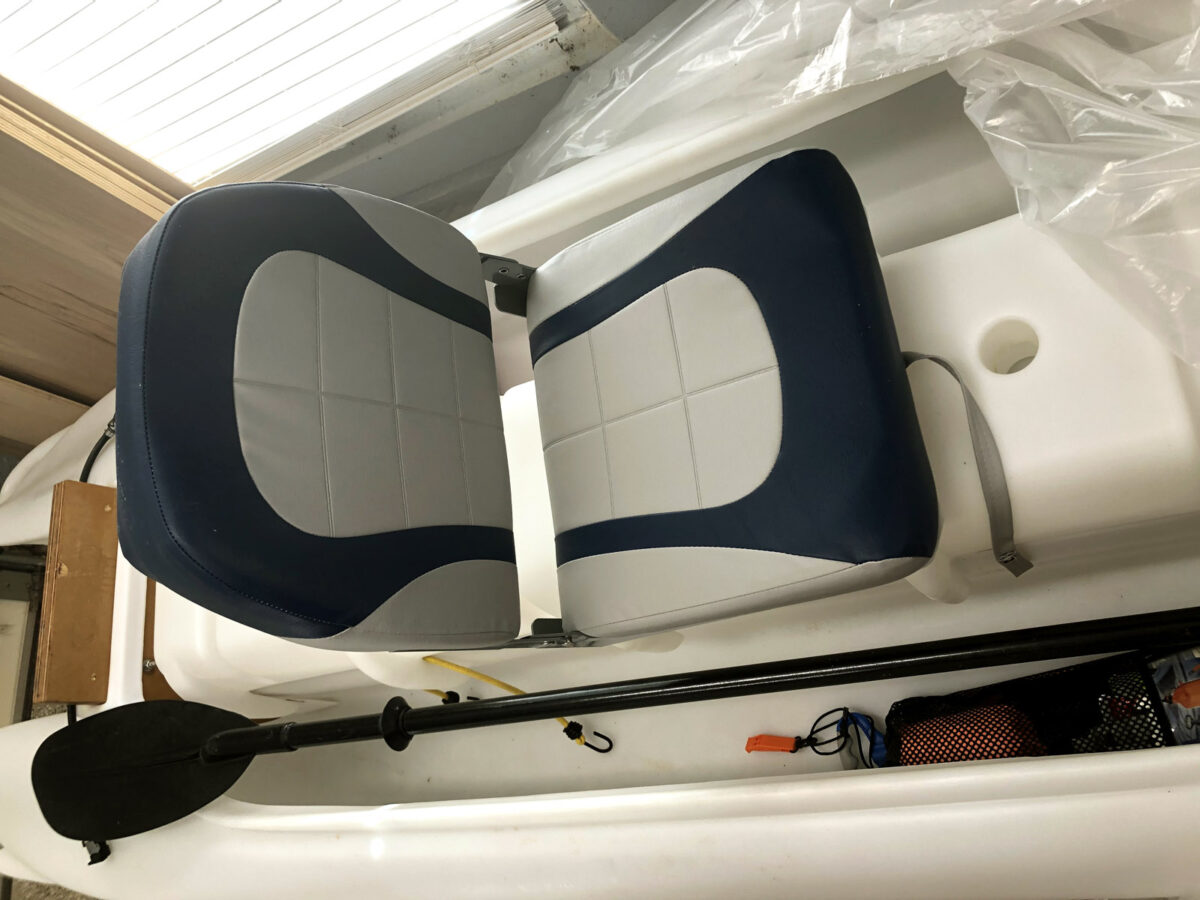
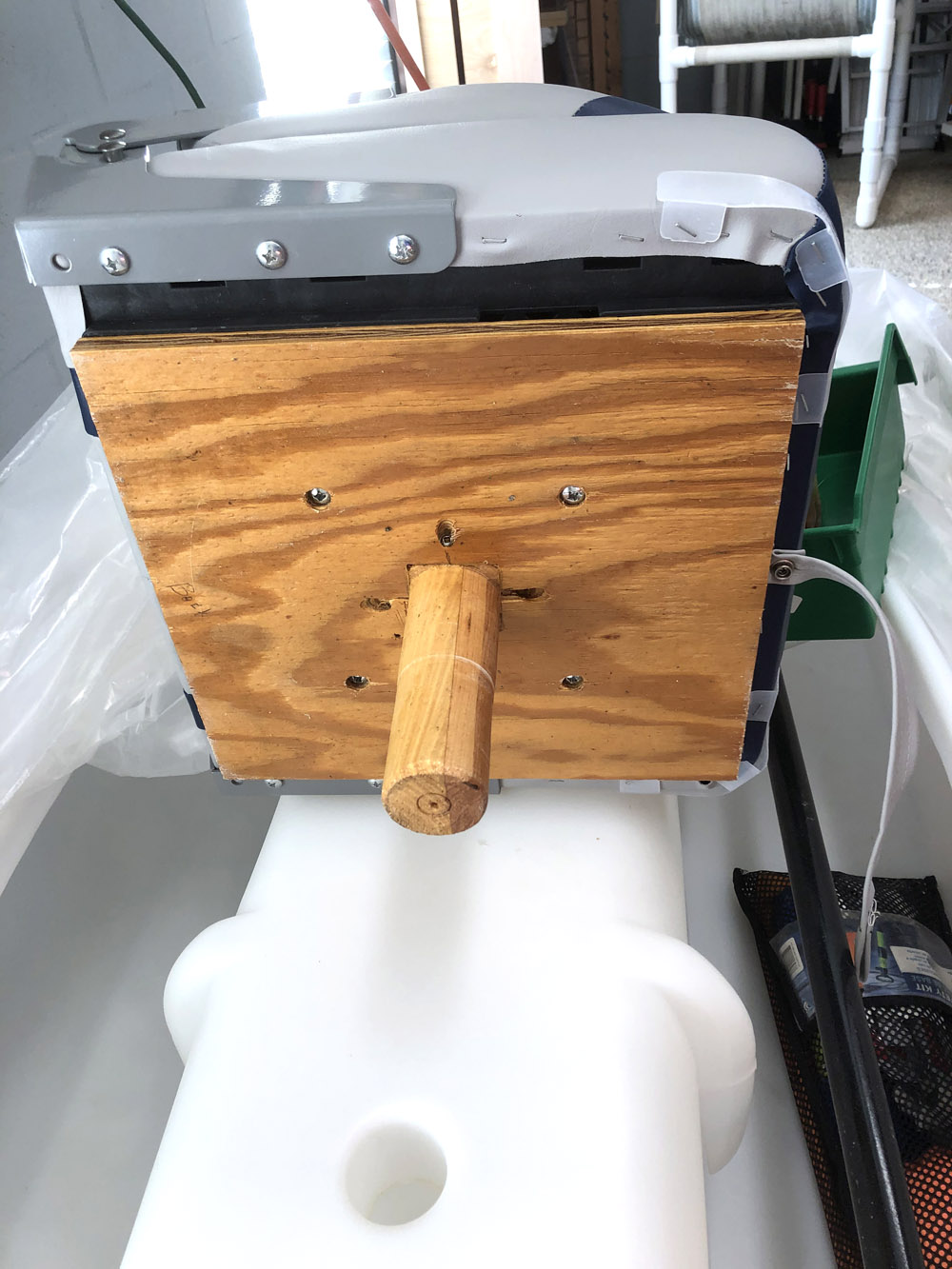
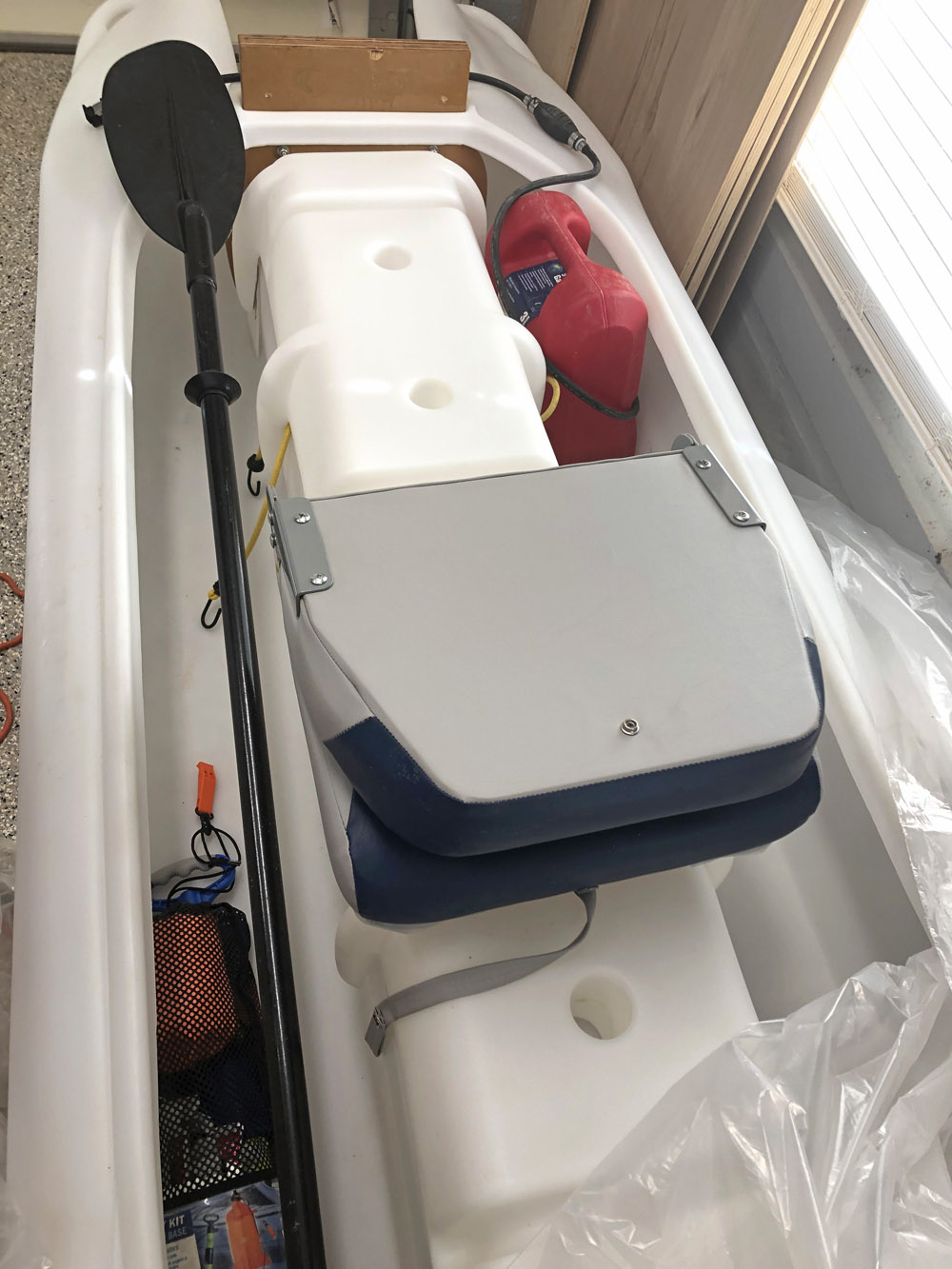
I wanted a comfortable seat with back support for my S4. My answer was to buy a boat seat and make a bracket with a round post that friction seats into any of the holes. I’m going to make another for my guest. Pictures attached. Once I made the bracket and post, it got several coats of spar urethane
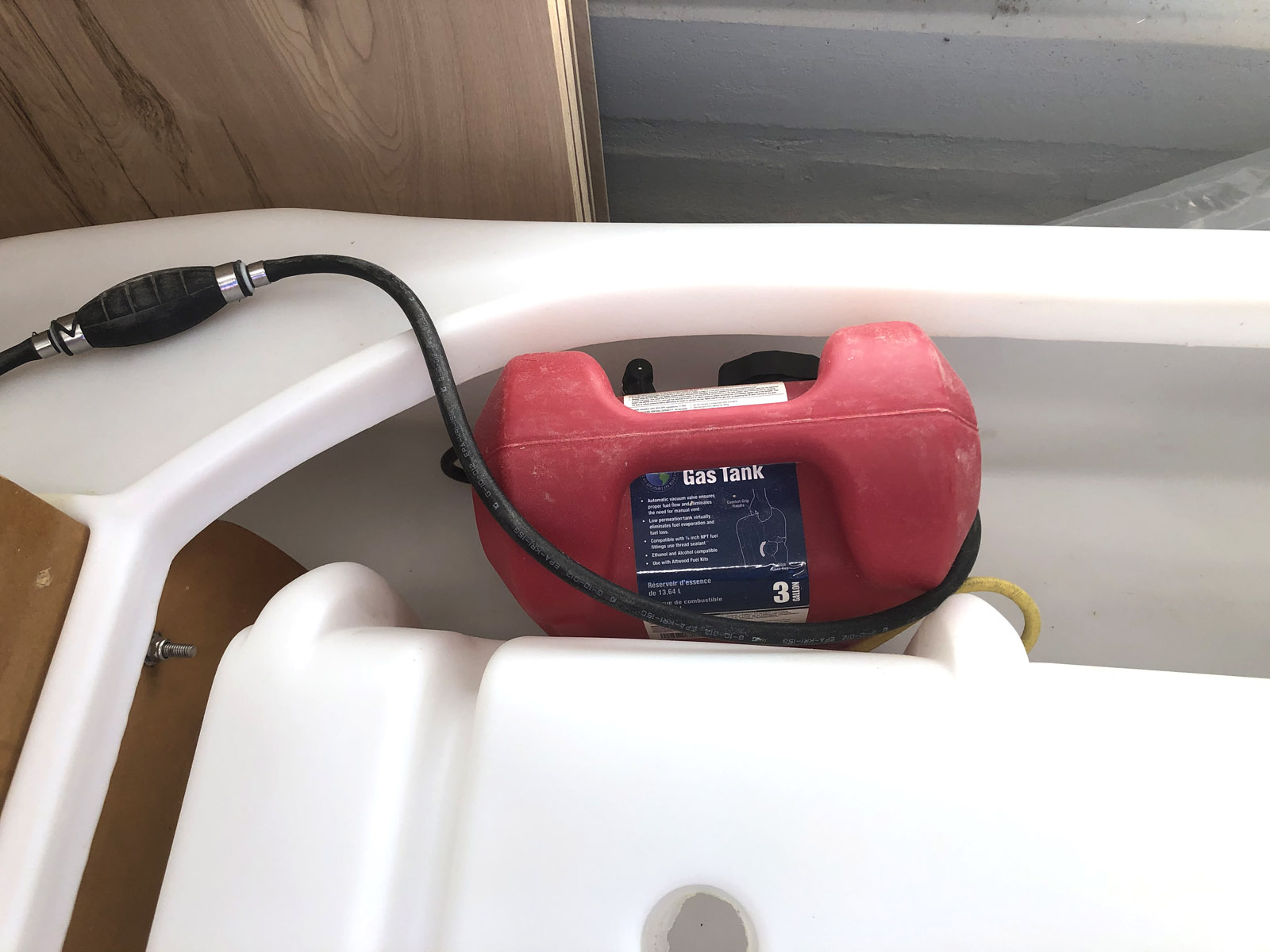
The tank I bought is 8″ thin with the connector sticking out of it, but still too thick to easily remove and fill. I was unable to find a resource to sell a marine tank that’s thinner.