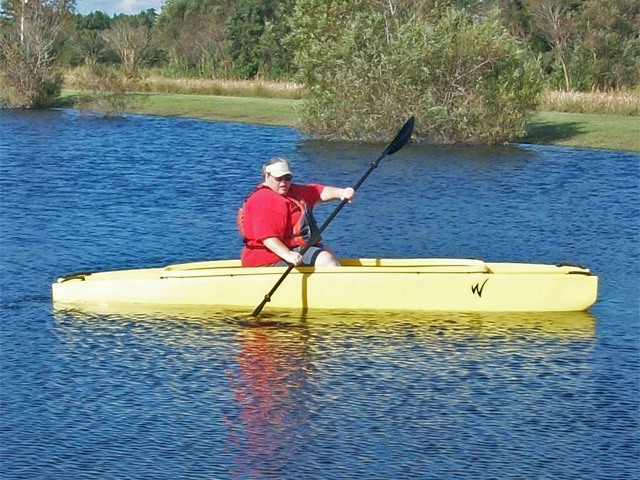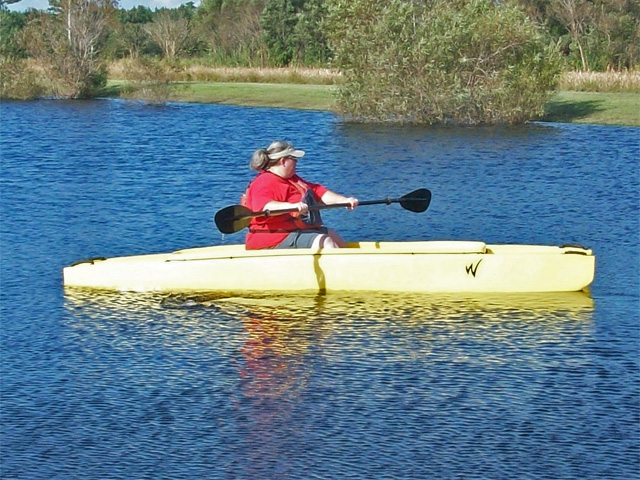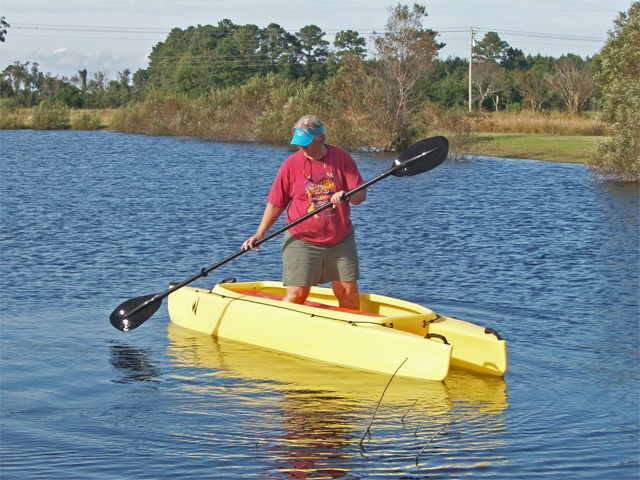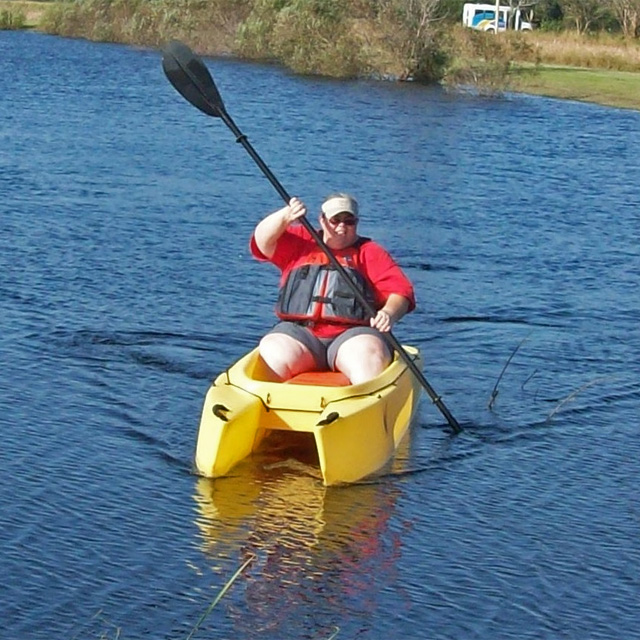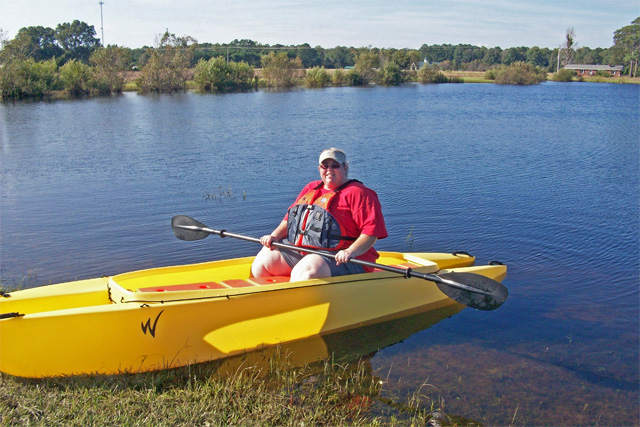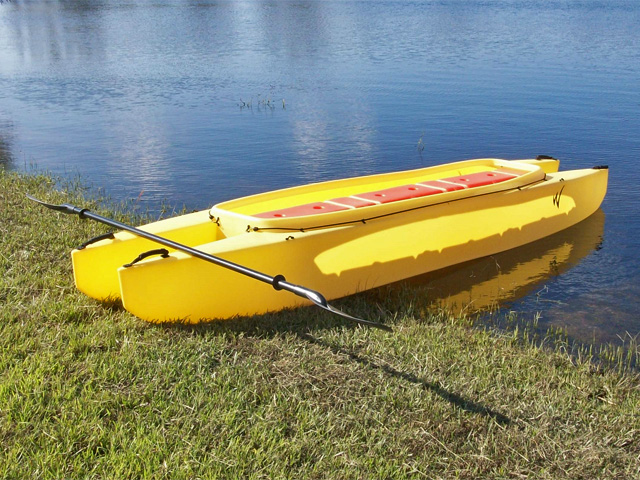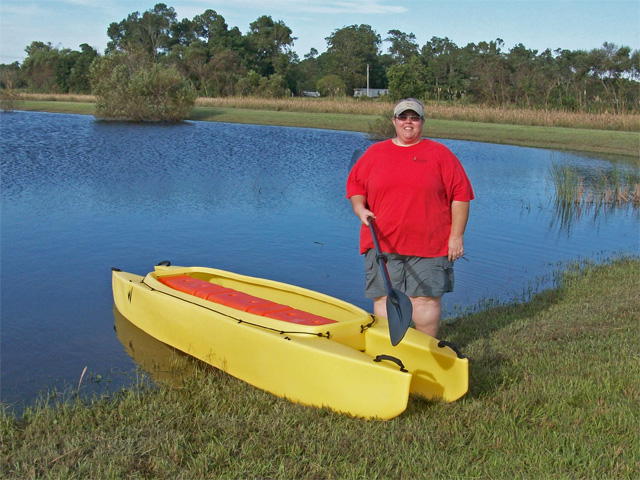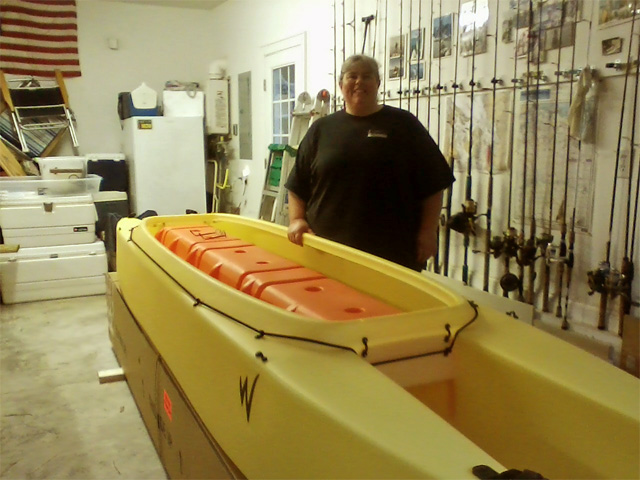
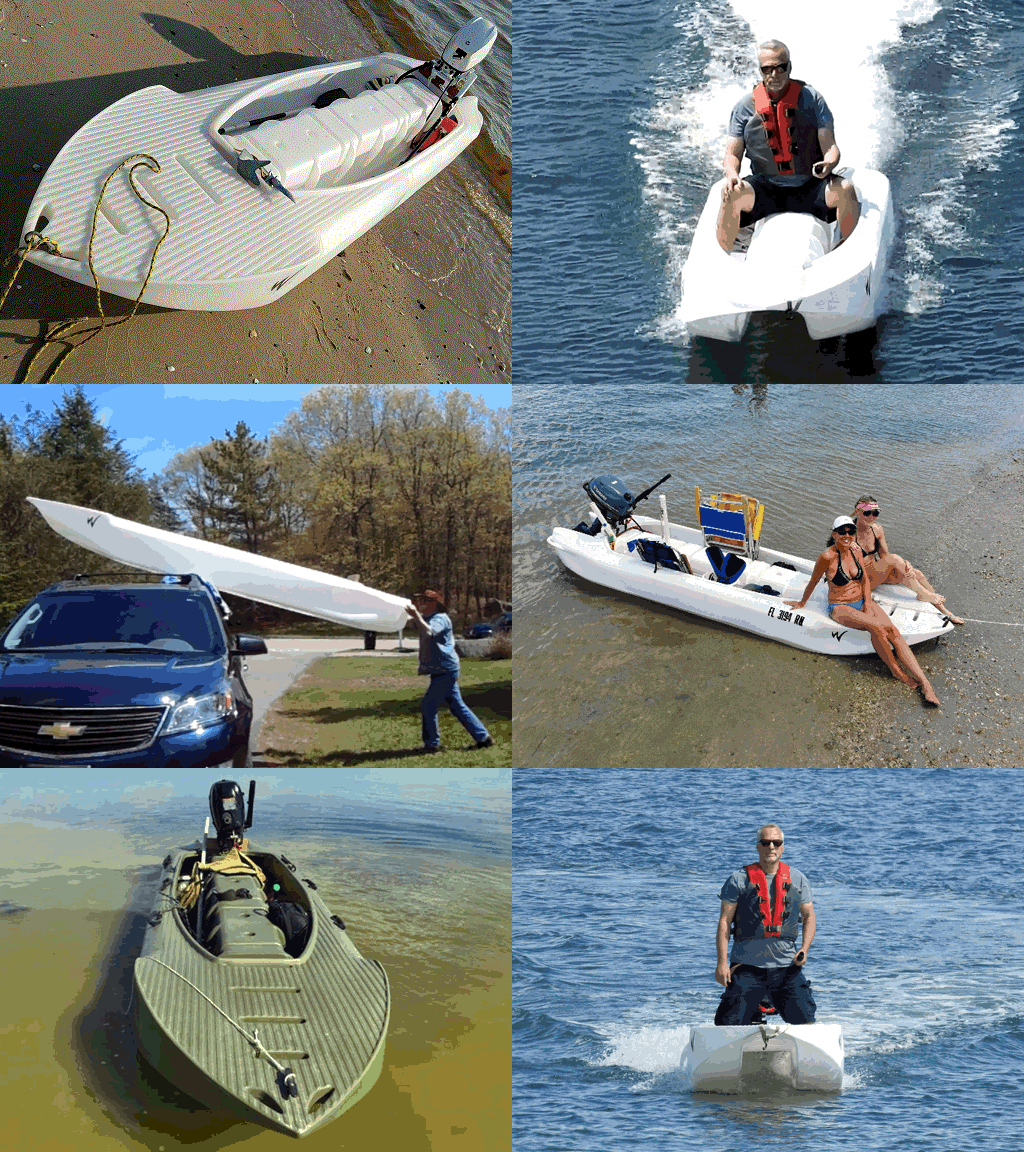
“Bonefish”, my customized, motorized Wavewalk 700

By Rem Seil

Florida

Completely satisfied with my W700, nicknamed “Bonefish”

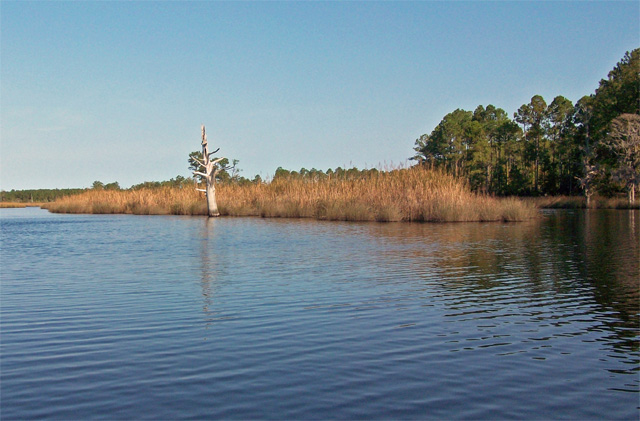
I put an electric 46# thrust electric motor on my W700, which gives me just under 4 knots speed. Perfect for the short distance backwater fishing I do. Went a total of 14 knots the other day (measured by iPhone app Navionics which can give you speed, route, and total distance of trip), This was an extra long trip for me through the narrow backwater channels. The W700 performed like a charm.

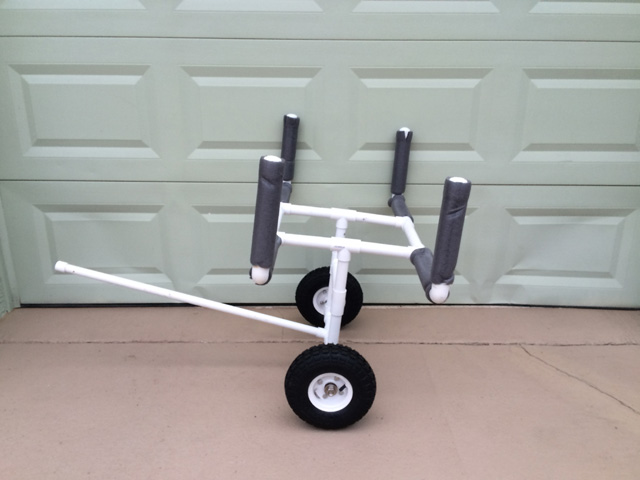
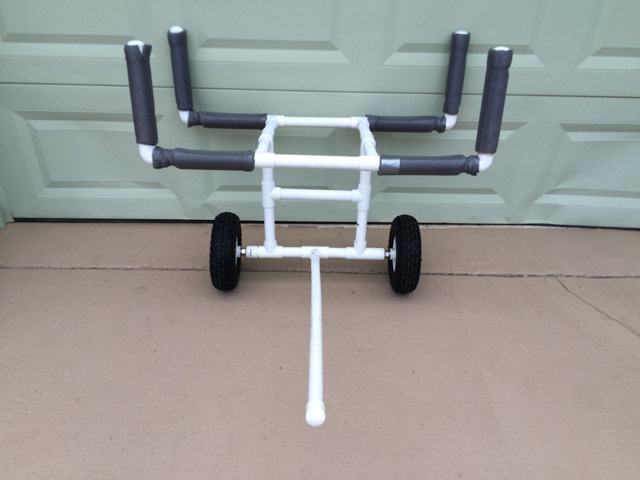
Designed some aids that makes the W700 easier to move around on dry land and load. One is a two wheel apparatus that allows me to easy take the kayak from my Jeep to my garage where I store the W700 (see attached photo). Could also be used if had a long distance from Jeep to water’s edge, but have not needed to use this as can drive the Jeep right up to the water.

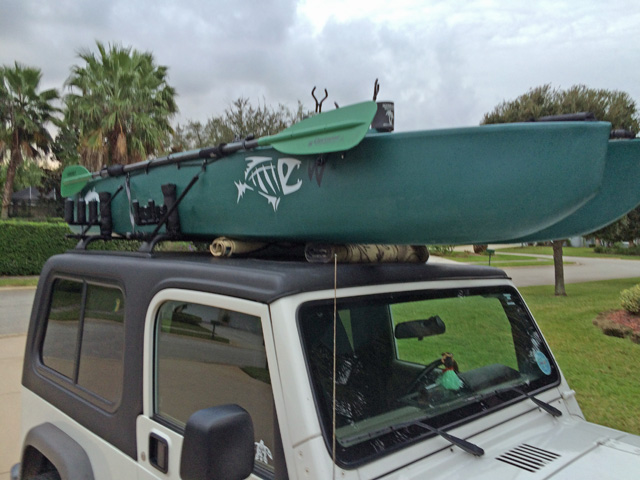
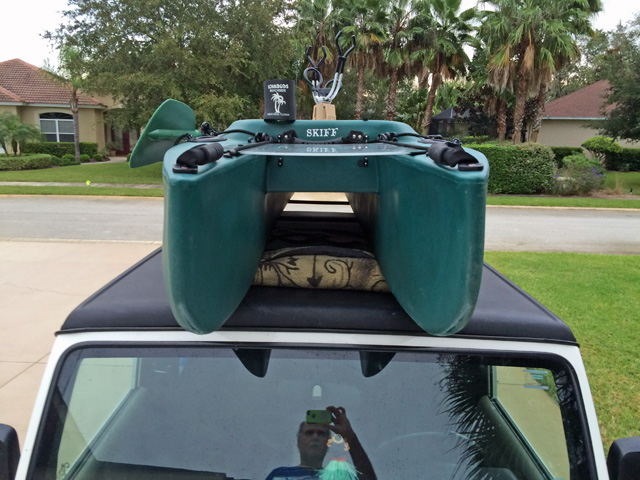
Also designed a “Catyak” (Catamaran Kayak) roof rack that enables the W700 to sit on top on my Jeep without sliding side to side (photos attached). Only need simple ties for forward an back. Load the kayak from the front end of the Jeep, using the hood as a “stepping stone”. Lay down little throw rugs on the hood and top of Jeep which enables me to simply push the W700 up the “ramp” sitting squarely on the Jeep’s modified roof rack. Can load and unload the Kayak in couple minutes without much effort.

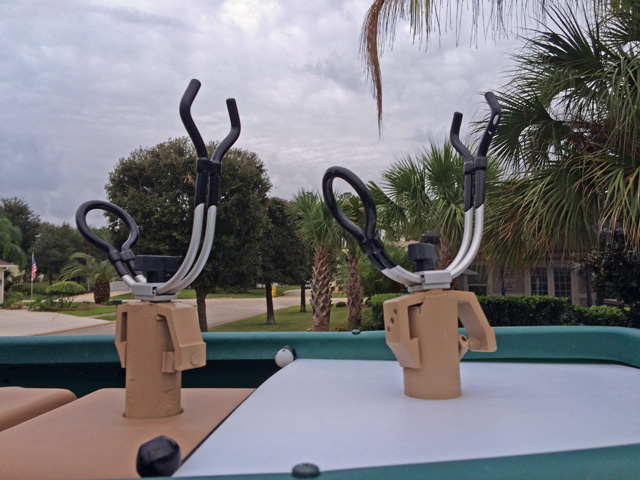
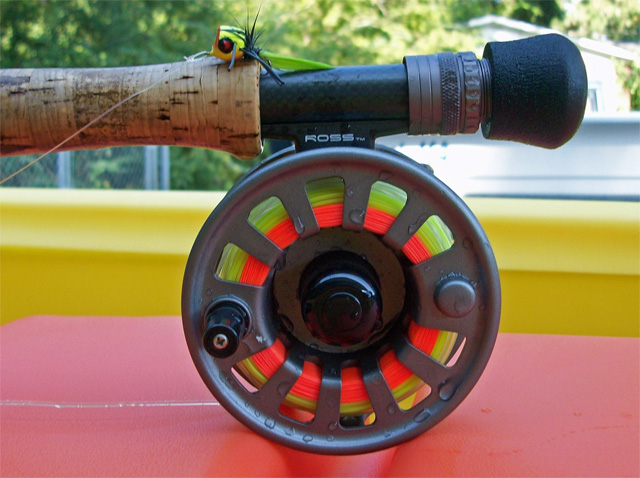
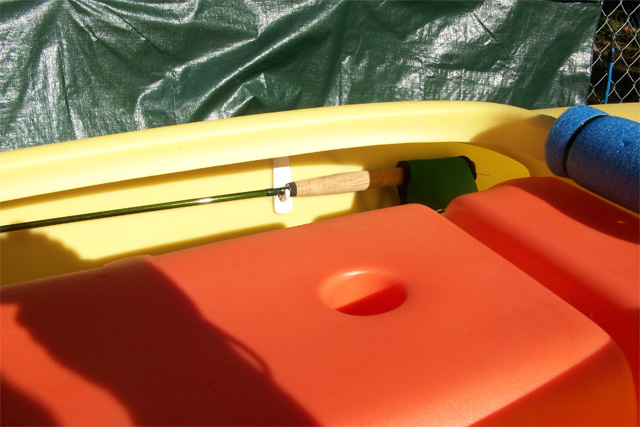
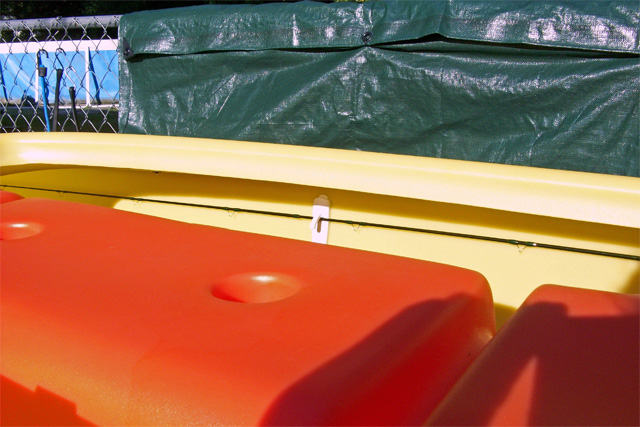
Made some aids for the battery holder, fish pole holders (see photo attached), and other minor items that enable me to easily maneuver around and fish out of the W700. Each trip I learn a little more and when come back, I make the adjustments required to simplify matters enabling more effortless time fishing. But that is the beauty of the W700, she enables you to personalize your Kayak to exactly how you want and your needs. You just have to be a little creative in coming up with aids that allow you to do this. There is NO manual…

Overall, having a great time customizing “Bonefish” and catching lots of Reds and Snook in the process.

Thanks…

Remo “Captain Bonefish”
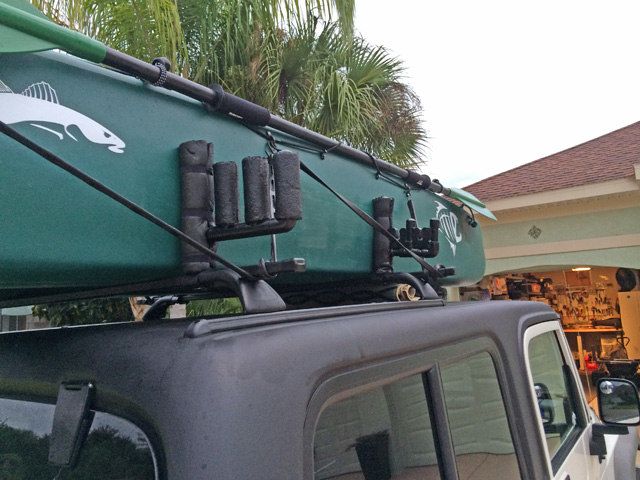
fishing kayak on roof rack


Pole Holder
Tite-Lok rod holders with DIY base inserted in the saddle


Roo fRack


Roof Rack 2


Trolly 2


Trolly

More rigging and fishing with “Captain Bonefish” »

More Wavewalk fishing kayak reviews »
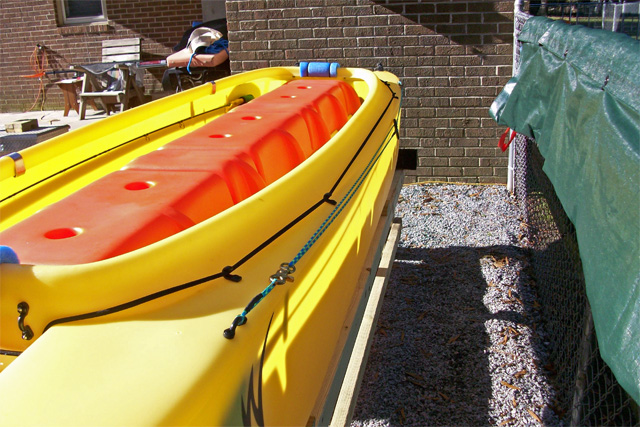


First W700 fly fishing trip lasted 5 1/2 hours

By Jill Toler

North Carolina

It’s 7:53 am; where is Fishing Buddy?

Evidently, she is sitting in the driveway waiting for me to get it in gear so we can begin our day. Today; Saturday, October 24, 2015, is the first day of kayak fishing for me. I had hoped to go sooner, but when you own a business sometimes it just doesn’t work out.

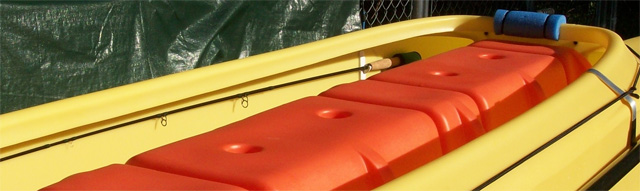
The preparation for this day began last week when I knew I was lacking some stuff that other folks have on their kayaks. I installed an anchor trolley, some rod holders, and a couple of soft spots at either end of the saddle gunwales. I used pool noodle for the soft spots and Command brand strips for rod holders. I wasn’t sure about the rod holders, but they have worked out great. Simple, yet effective. Prior to installing the new stuff I totally snaked Steve Anderson’s paddle holder idea and made some of my very own. I used thin, flat aluminum bar and bent it to the contours of the kayak. I filed smooth the sharp edges and covered parts of the holders with good ‘ole duct tape. After all that work I felt way more prepared to use my kayak for catching.

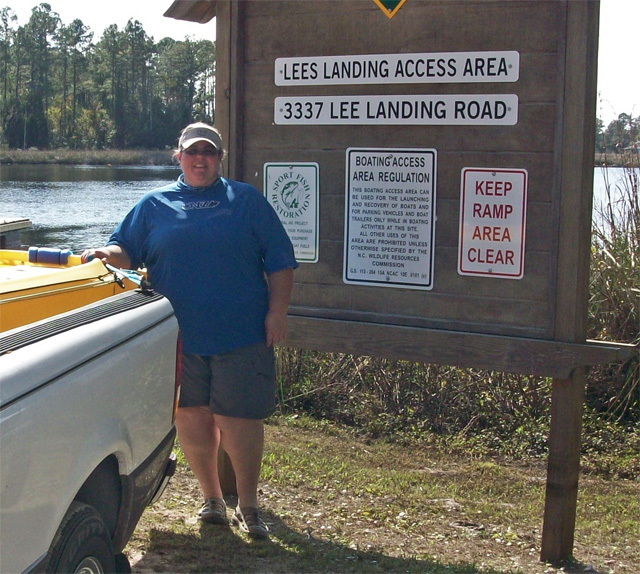
I decided my first outing should be somewhere familiar and protected in case the wind blew a gale. Jan and I chose Lee Landing on the Upper Broad Creek of the Neuse River. The Neuse is brackish down my way, so we knew that we could potentially catch anything from sunfish to drum or speckled trout. Fishing Buddy gave me some advice about packing for the day and what to take and what not to take. I reorganized 3 times before I was satisfied with my choices and included flies and gear for typical salt and fresh water fishing. I also remembered the camera, yay for me!

We arrived at our destination, unloaded the kayaks from the vehicles and then loaded the kayaks with stuff. Fishing Buddy got on the water first and I followed eventually. I really need to work on the “scoot”. Alas, I was afloat and paddling toward a dock. My second encounter with a dock went a lot better than my first encounter. I slipped my fly rod from the holder and made a cast in anticipation of getting bent; I would have to wait a while before being bowed up. I paddled, cast, and repeated.

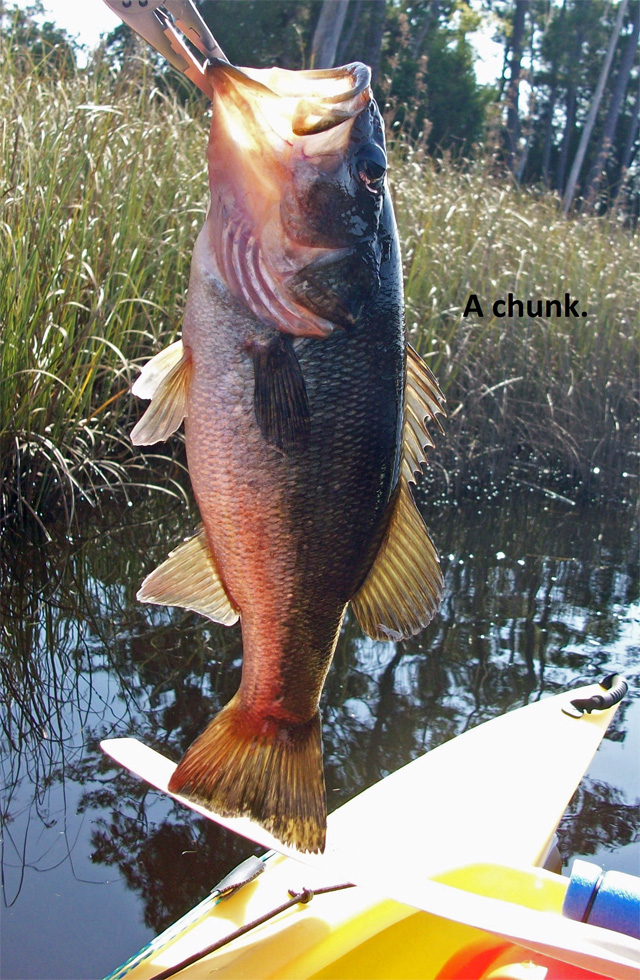
I hoped to catch some trout, so I started fishing with a black and orange clouser fly. I then changed to a chartreuse and white clouser fly after no strikes or hook ups. Fishing Buddy had changed from a tutti frutti fly to an all white with gold flash clouser fly and caught a bass on a sunny bank. I decided to go with a white wooly bugger, but that didn’t work too well either. We were both throwing intermediate lines and even though I usually throw a floating line when fishing small poppers, I decided I was going rogue. The wind was blowing me around pretty good, so I backed my kayak up into some reeds while I tied on that awesome little popper and when I was all tied up I eased over toward the sunny bank and made a cast between a cypress knee and a clump of reed grass. Float, strip, pause, strip, pause, BAM! FISH ON! I knew it was a bass because he commenced to pulling me toward his lair and I went to hollering. I was so happy that I evidently failed to see two folks paddling a canoe get close enough to join in the celebration. Unfortunately, my Fishing Buddy had paddled up the creek so she missed the whole scene. The nice canoe folks assured me that they would convey the good news when they got around the bend.

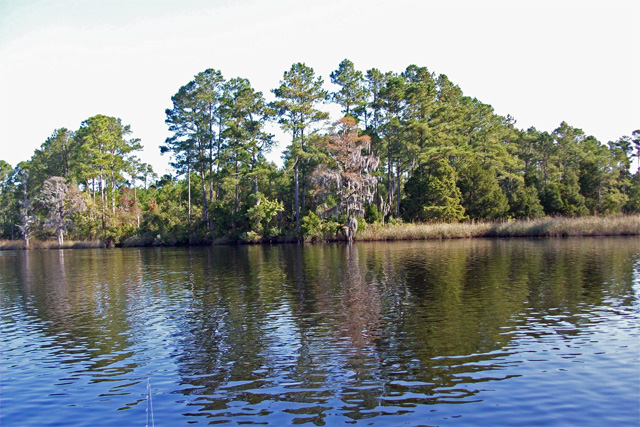
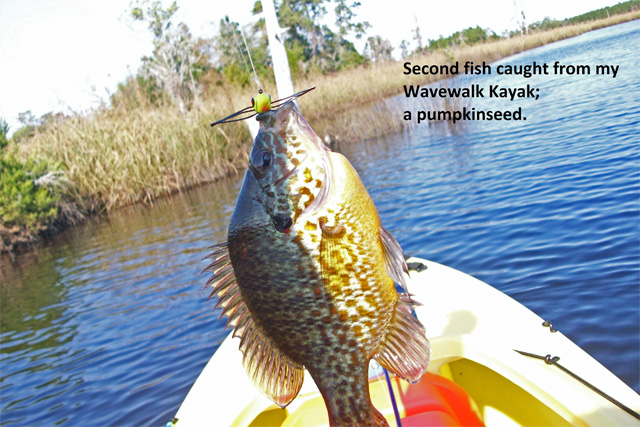
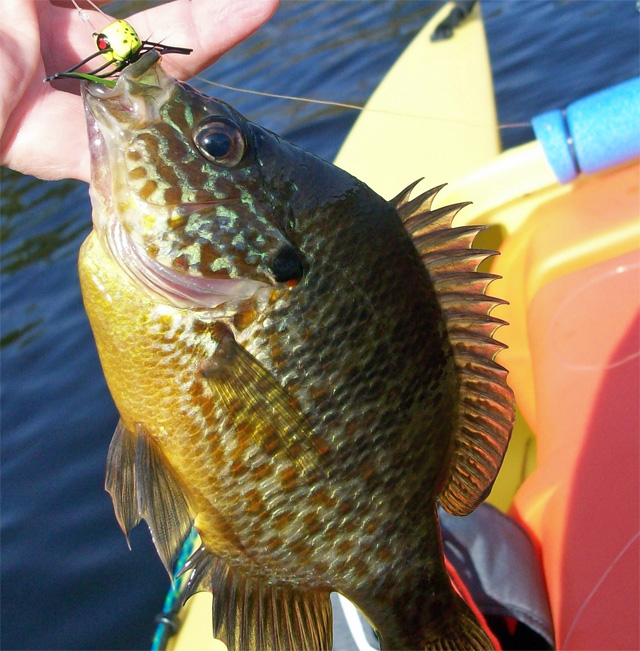
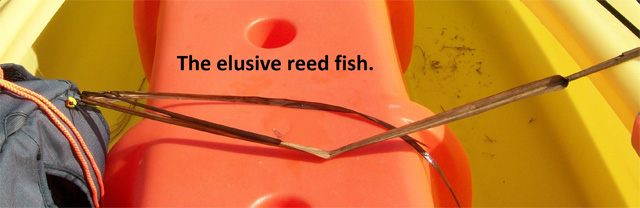
The remainder of the trip was spent catching pumpkinseeds and bass. I did manage to land a reed fish; they are very elusive you know.* 🙂  happy It was 2:00 pm when we arrived back at the boat ramp. We got loaded up and helped a fella get his boat trailer backed down the ramp to retrieve his boat, it was his first time and he needed a bit of guidance.

I had no idea that I had fished for 5 1/2 hours. I learned a lot today and will tweak some things for my next trip. I am so tickled with my kayak and I am so anxious to go again.

I have attached some pictures.


anchor-trolley-on-Wavewalk-700-kayak-1
My W700 outfitted with an anchor trolley


cockpit-view-of-W700-fly-fishing-kayak

at-the-boat-ramp
At the boat ramp


chunky-bass-1  first-fish-caught-from-my-W700-kayak-a-bass


fly-rod-with-short-handle

hook-for-fly-rod-2
Storing my fly rod on board

hook-for-fly-rod-3


Neuse-river-NC
Pictures from the Neuse river

Neuse-river-NC-2


pumpkinseed-fish


pumpkiseed-fish-1
Pumpkinseed fish

the-elusive-reed-fish

More fly fishing and rigging with Jill »

Maiden voyage for my W700 fly fishing kayak

By Jill Toler

North Carolina

Today was the day; the maiden voyage of Float-n-Fly. There was more float than fly since it was my very first water day in my W700 and only my second time ever in a kayak.

The sun was shining, the wind was blowing about 10-15 mph, and the mosquitoes threatened to hijack my voyage by sucking all of my life blood from me. Despite the wind and squadron of eastern North Carolina skeeters; also known as crop dusters, I pushed off the bank and into a most epic experience. I was immediately blown into a scraggly bunch of above water branches and then decided I better do something so that I could actually claim that I paddled my kayak. I tentatively placed a blade in the water when my Fishing Buddy called out to me and said that my paddle was backward and upside down. Go figure; I did mention that this was my first trip, right.

Lesson #1-It does matter how you hold your paddle.

I adjusted the paddle and started with a good stroke, then another, and then another. Perhaps this was going to work after all. I paddled around in a circle; not because I tried to, but because the wind was pushing me around and around. I finally got turned toward the bank and glided right through the shallows and up onto the grass. It was at this time that I realized I was still on the seat of the kayak and not swimming to shore. Major accomplishment made super easy by the stability of the W700. Fishing Buddy, who is an avid kayaker, gave me some pointers on creating good, productive strokes by turning at my waist and when to lift the paddle out of the water.

Lesson #2-I am not paddling for a world record and it’s not a battleship. Easy and steady will get me where I want to go.

I received some more pointers and great information from Fishing Buddy about turning around and pushed off from the bank one more time. I paddled all around about half the pond practicing the proper stroke so as not to wear myself out and headed to the shore to find out how awesome, or not, I was doing paddling and turning. I said, “How do I look Fishing Buddy?”. She said, “Really good Fishing Buddy.” (“Fishing Buddy” is the nickname we use for each other because she; Jan, has a twin sister named Jill, and my name is Jill.) If you are confused, it’s okay because even after 8 years the guys in our fly fishing club can’t get our names right either.
Anyway, after she proclaimed that I was doing a good job I asked her what else I needed to know. She said, and I quote, “get the hell out so I can try it”.
I knew I had chosen a winner.

I want to talk about the obvious virtues of the W700 that are specific for me.
The first thing is that I am a bona fide big girl who loves to fish and wanted a new adventure. Most kayaks are not made for big girls and most big girls aren’t going to try kayaking or kayak fishing because you are afraid to be embarrassed by not being able to get in or out of a kayak. The W700 solves this problem with the ease of getting in and out without squatting, waddling, rolling, or flopping. You step in and sit down. It’s just that easy.
Secondly, I never felt like I was going to roll over, fall out or flip over. I was plenty nervous at first but I got my butt adjusted and just sat there. Easy, peasy. I wore my brand new life jacket in case I went for a non voluntary swim, so I felt very safe. Next time I will try standing up; which my Fishing Buddy was able to do right away. She is way more awesome than I, but I will get there.

Overall, I am just amazed with the W700 and so happy that I got one of my own. I have attached some pictures to prove it.


first-time-paddling-for-this-fly-angler (2)


first-time-paddling-for-this-fly-angler


fishing-buddy-testing-the-W700-for-stand-up-paddling
Fishing Buddy paddling standing


heavy-angler-paddling-her-W700-fishing-kayak


Jill-sitting-in-her-fly-fishing-kayak


Jill's-sunshine-W700-fly-fishing-kayak
Float-n-Fly, my Sunshine colored Wavewalk 700


Jill-standing-by-her-new-Wavewalk-700-fishing-kayak


Jill's-W700-and-fly-fishing-poles-collection copy


Dog platform? I don’t think it’s necessary with the 700…

By Joe Stauder

I think Wavewalk hit a home run!
It’s hard to believe Wavewalk could improve on the stability of the 500 series, but you did!
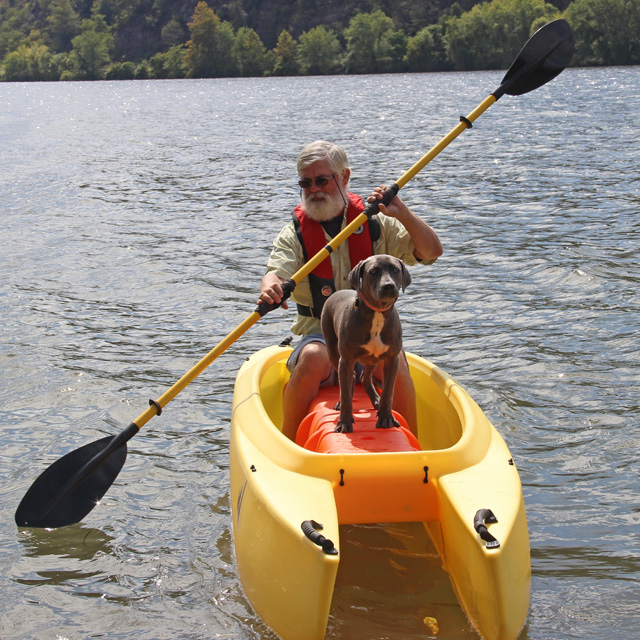
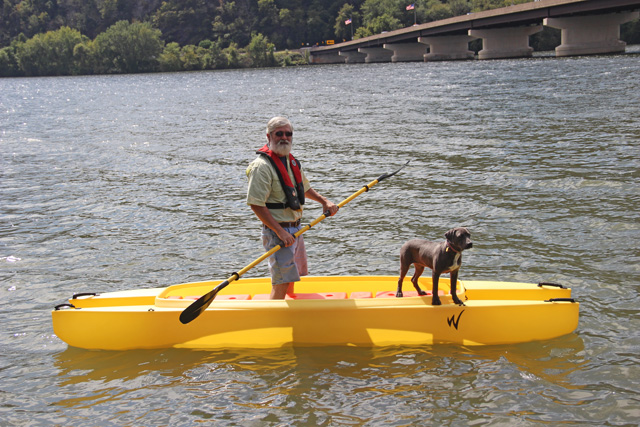
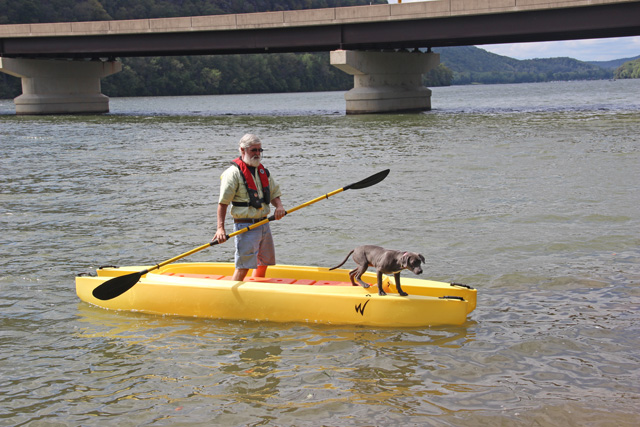
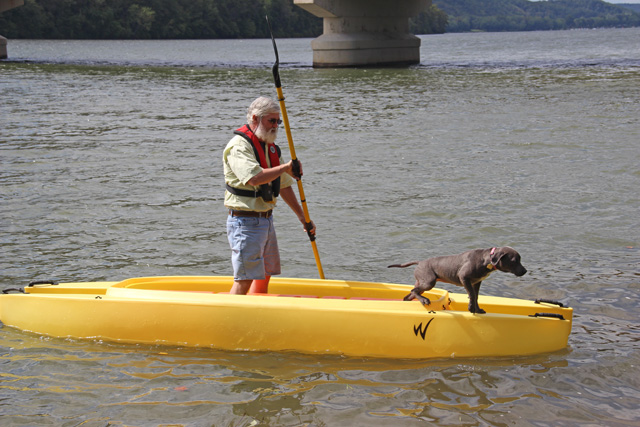
The new 700 series is the perfect size for two adults, & Zena (my dog), in fact my wife Susan would be along with us, but today she is behind the camera. You can see though Zena was moving around (as kids & dogs do) and there was no tipping issues at all.
The fish-ability out of this craft will be unsurpassed especially in bigger rougher water catching larger fish.
I was a little concerned about the weight of this new Wavewalk 700, however it seems to be a very manageable 80 lbs. due to the four carry handles & the slightly wider design.

Pictures from our first trip on the Susquehanna river in our new Sunshine W700 –

angler-and-dog-on-board-kayak
Dog platform? Not for me, thank you…


dog-platfrom-no-thanks
This W700 fishing kayak is stable enough for me…


is-this-a-fish-down-there
Are those fish down there?


ok-I-think-i'm-going-to-check-this-fish
Can I jump in and chase that fish?…


Stability vs. Speed?

Fishing kayaks are the stablest as well as the slowest of all kayaks, but not all fishing kayaks are the same, and the W700 is the exception: It is the most stable kayak out there, and it is as fast as a good size day-touring kayak.

It is a well accepted notion among many paddlers and designers that a kayak can be either stable or fast, namely the more stable it is the slower it would be, and vice versa. This notion is the product of the world of mono-hulled boats, and it is true for this form of vessels, but it falls short of being applicable to multi-hulls such as typical catamarans and W kayaks, which are more stable than mono-hull boats of comparable size, while being faster too.

We’ve discussed these issues and similar ones many times in the past, because they are important. This time, we found an opportunity to demonstrate this principle in a video footage that Michael Chesloff shot of Ernie Balch testing the new W700 (see his review) –
Extreme Stability is shown by the fact that Ernie, a 65 year old big guy who weighs 300 lbs just steps into the W700 and paddles it standing up without any problem.
Exceptionally good Speed is shown through Glide, which is the ability of a kayak to keep going forward on flat water after its passenger stopped paddling. The distance the kayak covers from this point to the point where it stops is the result of the kayak’s initial speed and the resistance of the water to its passage.
Ernie is not a kayaking champion, and the speed he attains while paddling the W700 is normal for a Wavewalk kayak, that is better than what he would have attained in another fishing kayak, but what happens when he stops paddling is noteworthy, as the W700 keeps gliding over a very long distance, until it slows to a halt in a patch of thick aquatic vegetation:


Another beautiful thing that can be observed in this gliding footage is how well the W700 tracks without any intervention from the paddler, not even a rudder, which no one has ever installed on a Wavewalk kayak because these kayaks are unbeatable when it comes to another type of stability: Directional Stability, a.k.a. Tracking.

Interestingly, SOT fishing kayaks are sluggish, hard to paddle, and they can’t glide. The reason for this is not just that their hulls are extremely wide and therefore generate excessive drag, but there’s much  more, and the article The secrets of the SOT kayak’s underside explains it.