More S4 rigging projects

Terry Pritchard

North Carolina / Florida

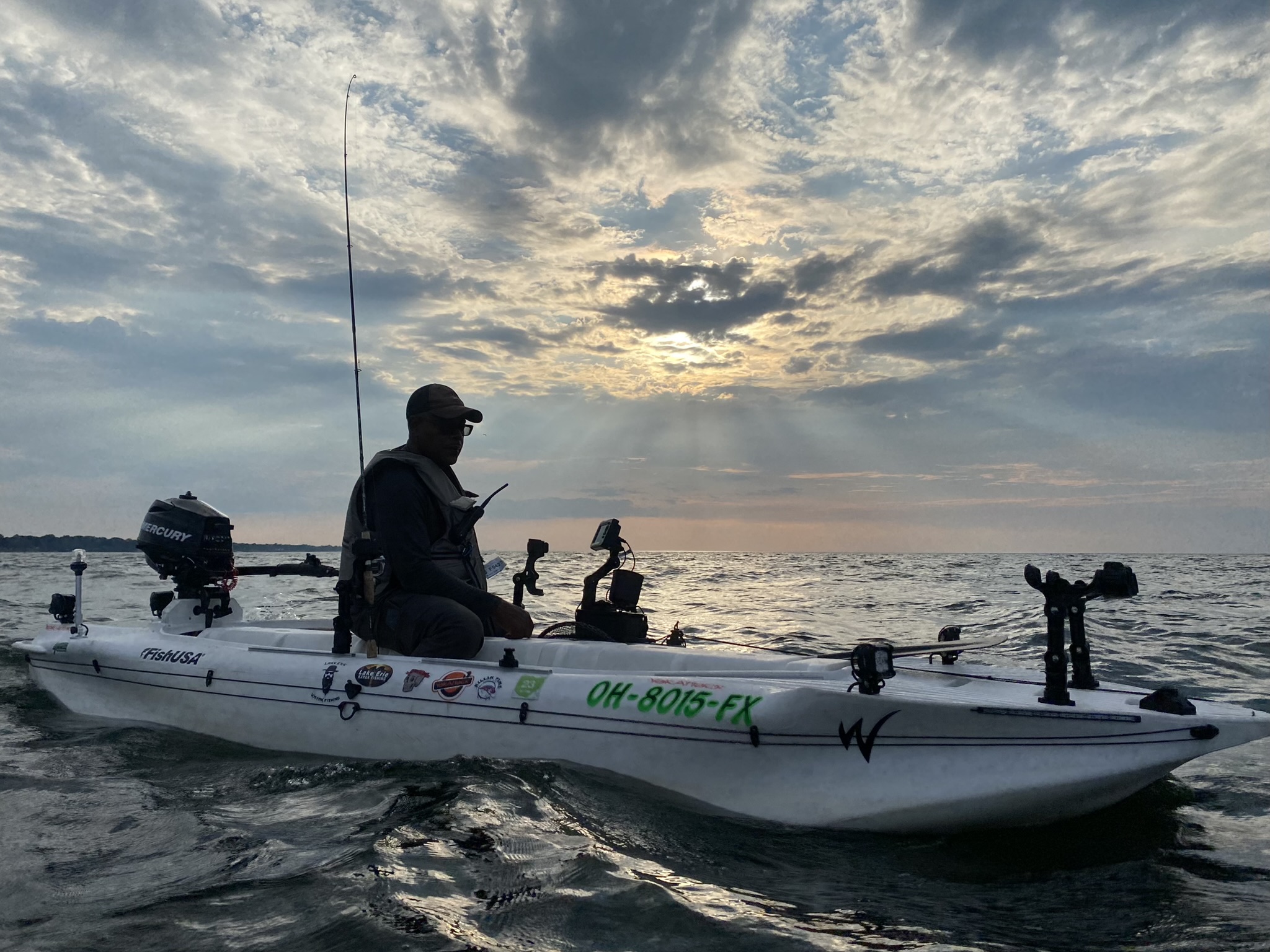
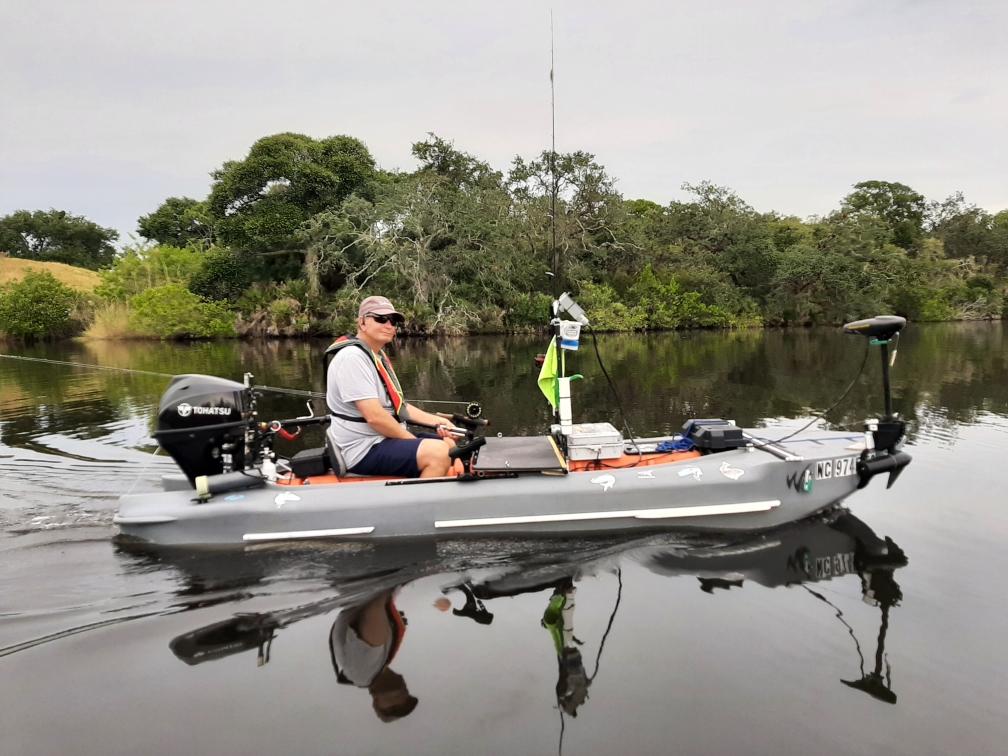
Driving my S4 microskiff

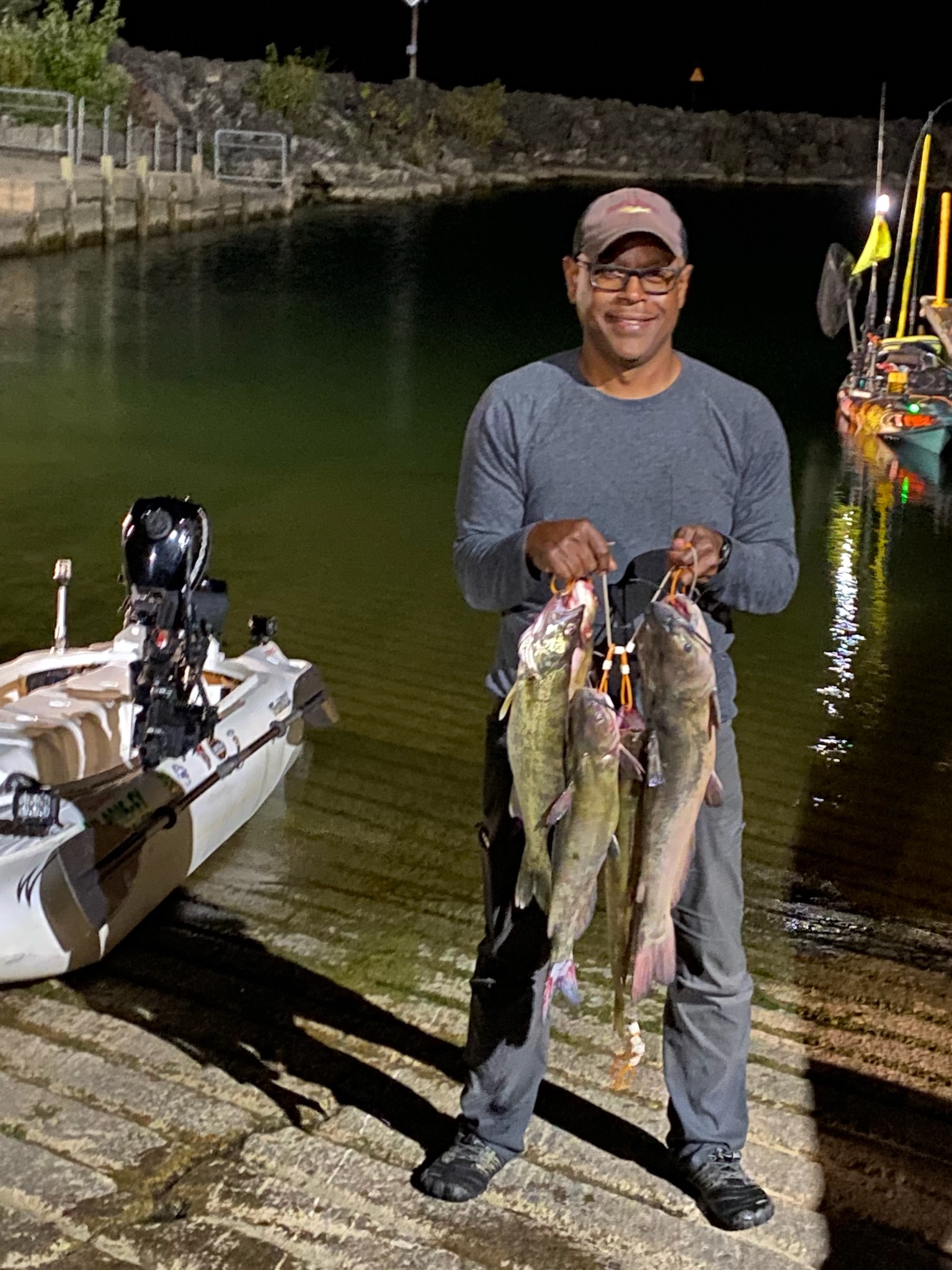
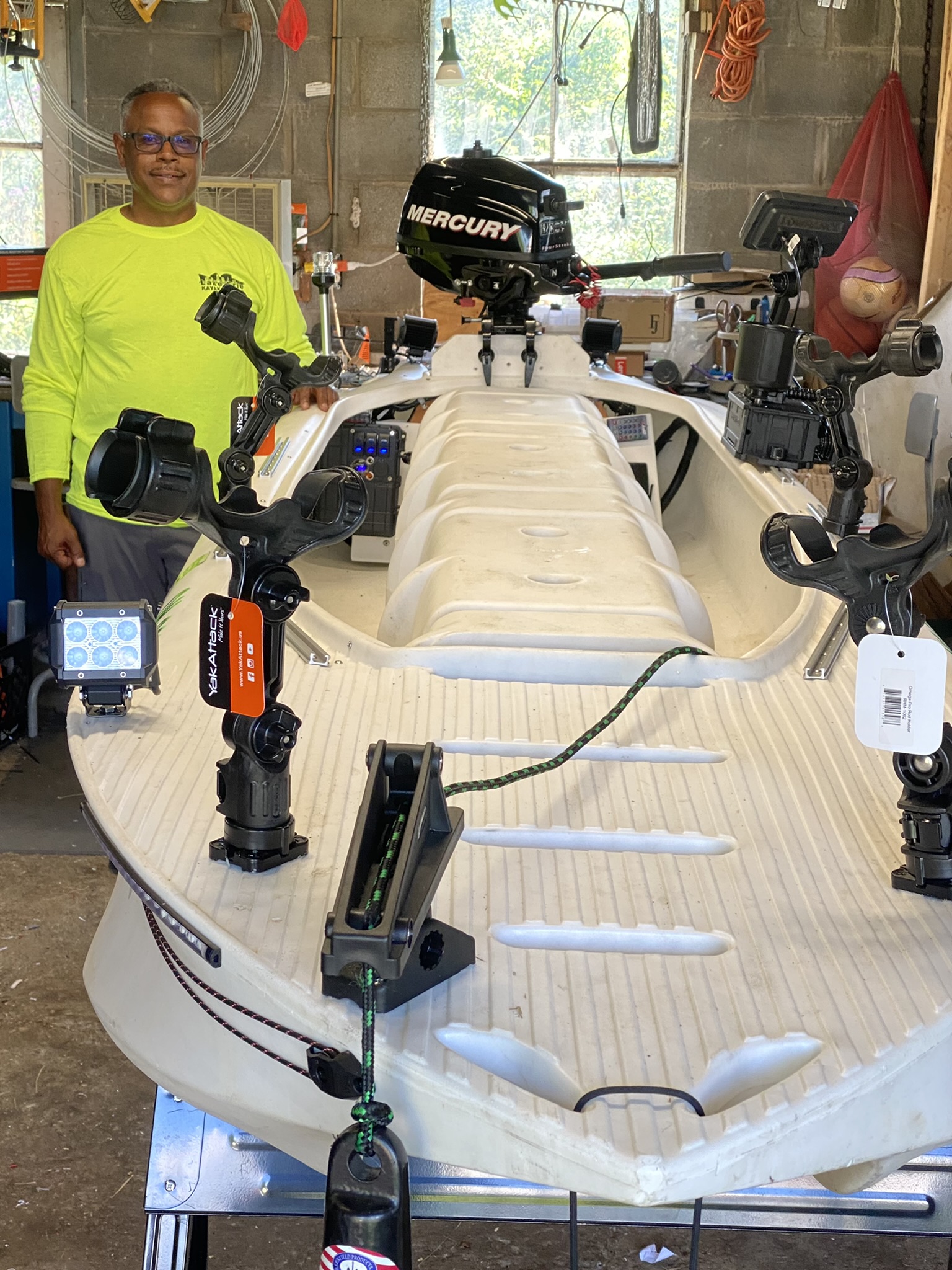
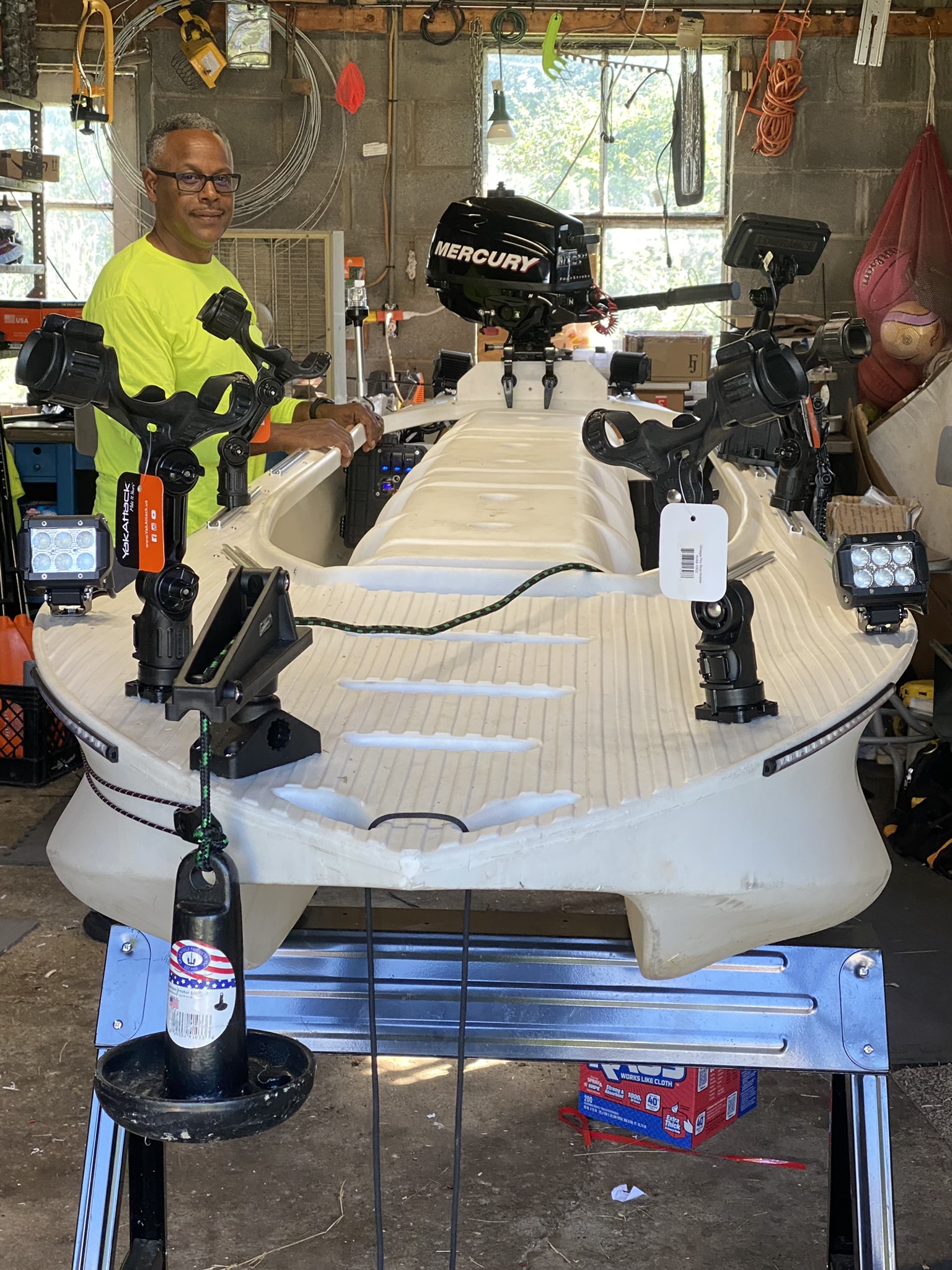
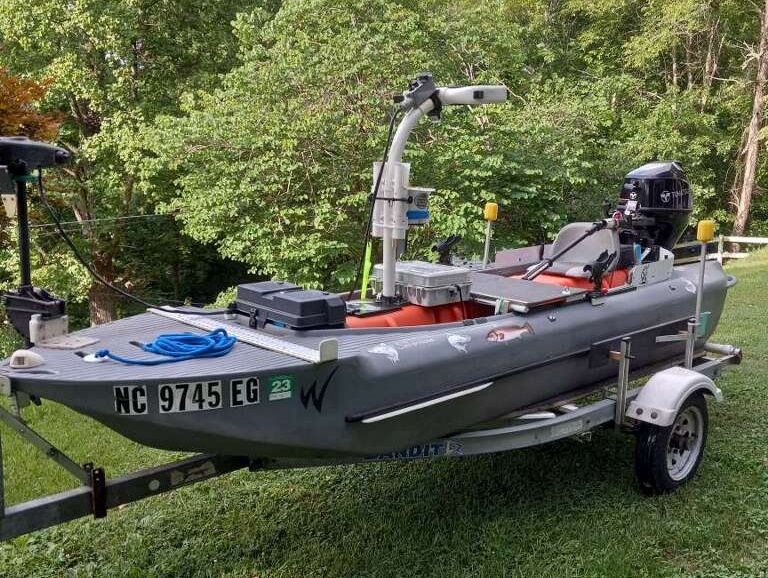
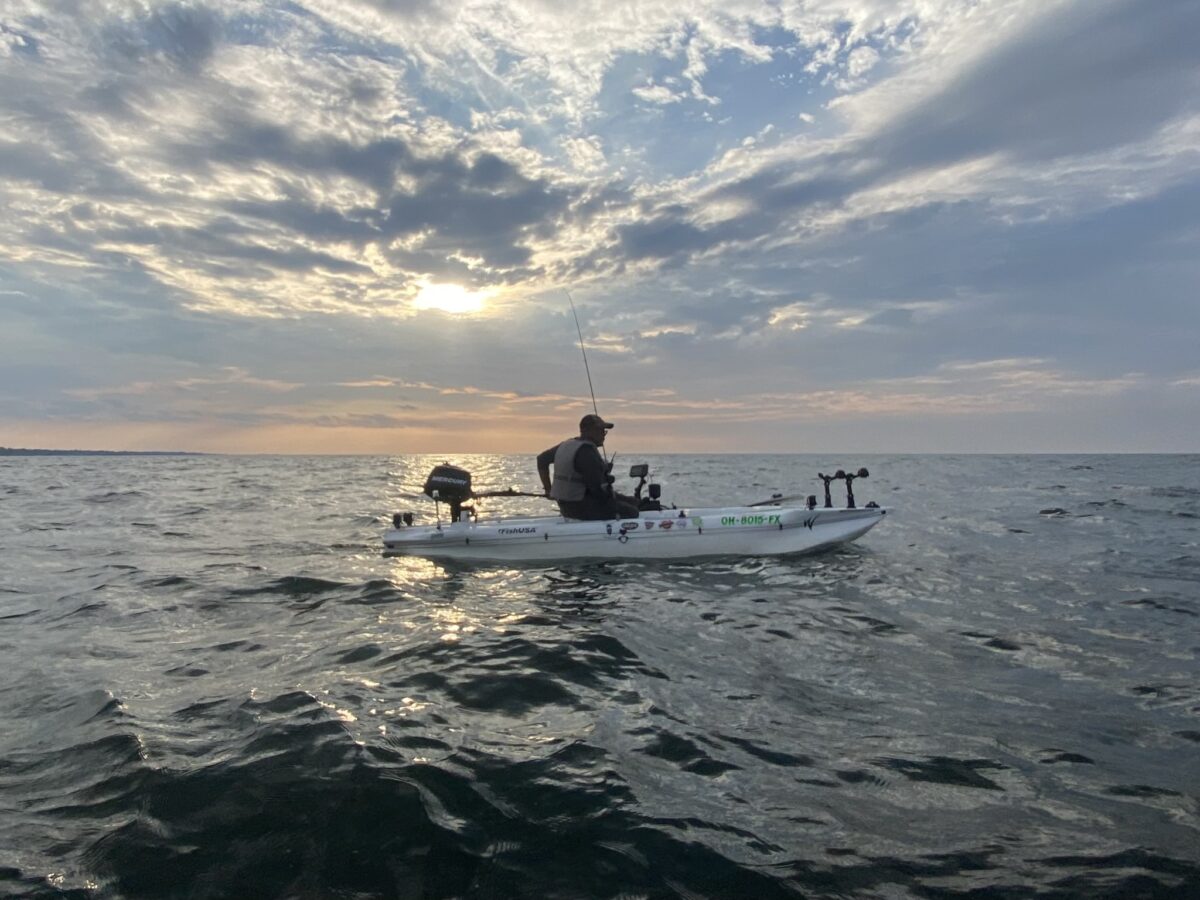
I have upgraded my s4 from the first pics I sent. I’m using it exclusively in the intercoastal waters in Florida catching snook, tarpon, and red fish. I have done a lot of modifications to make all this work.
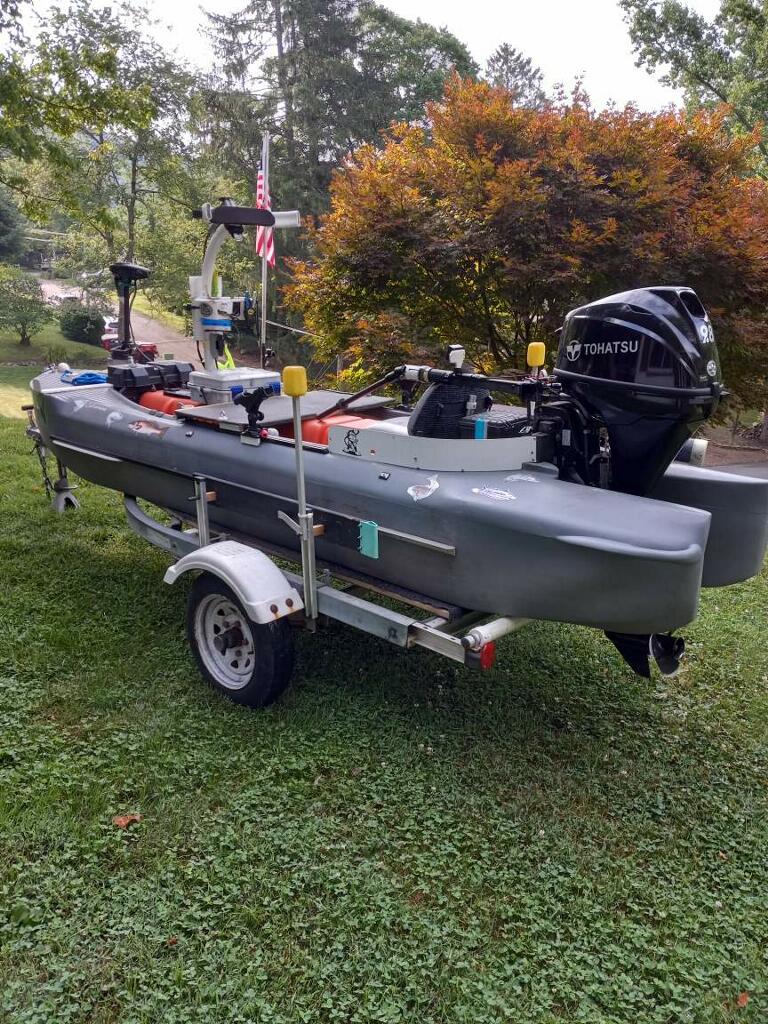
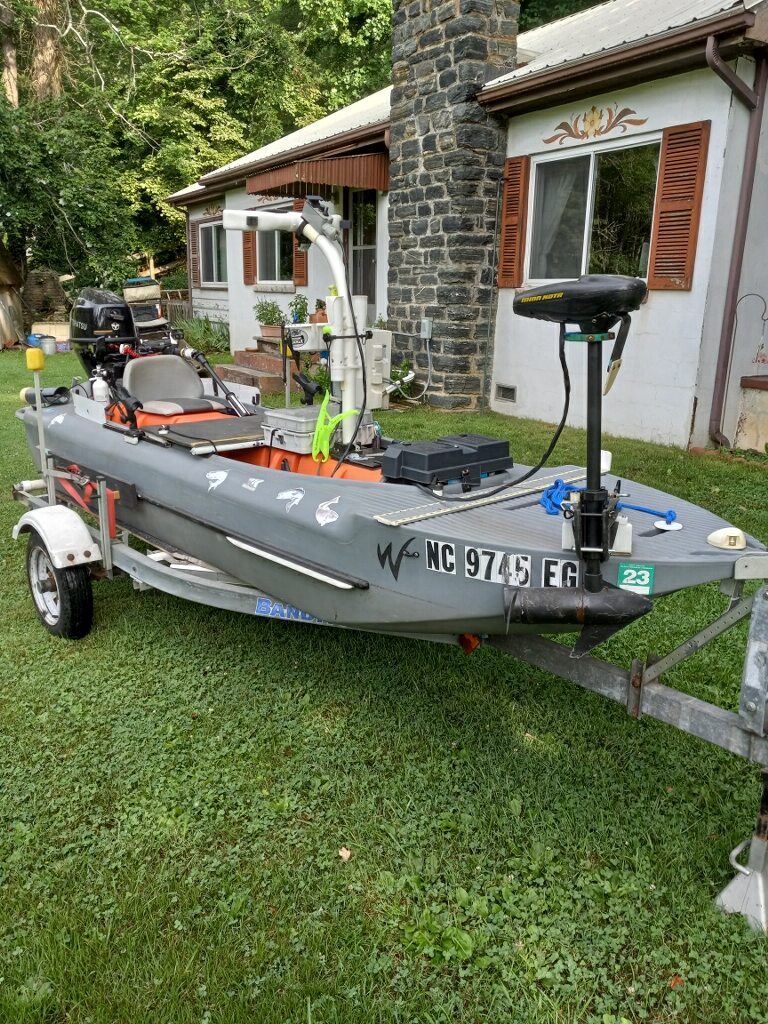
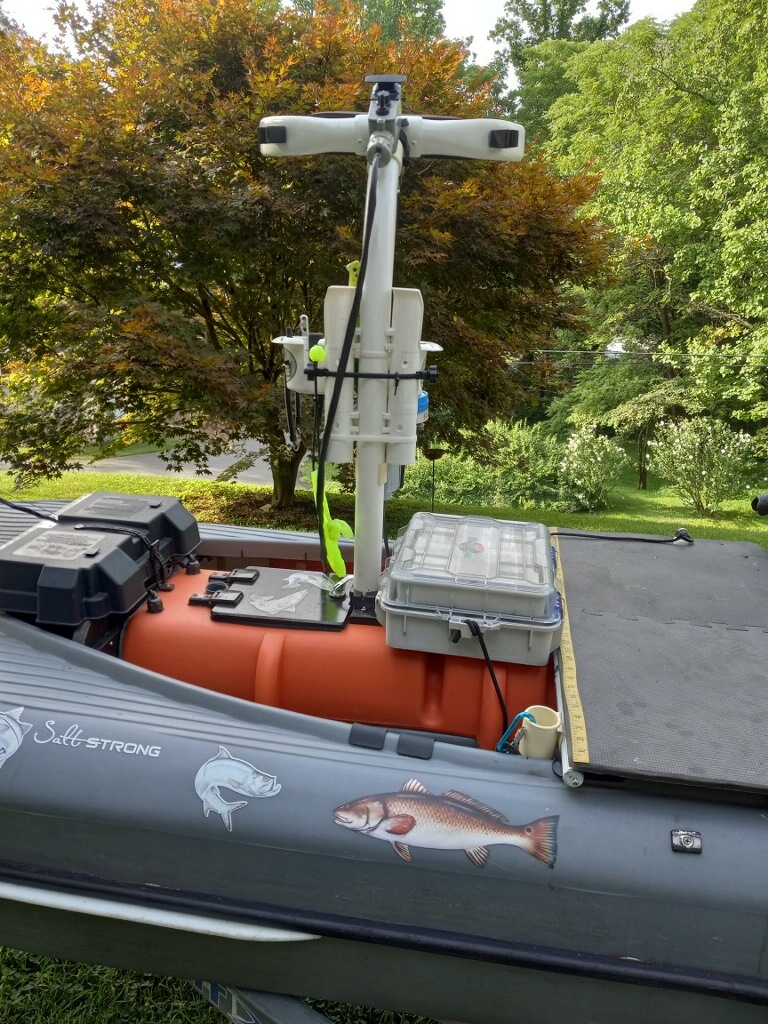
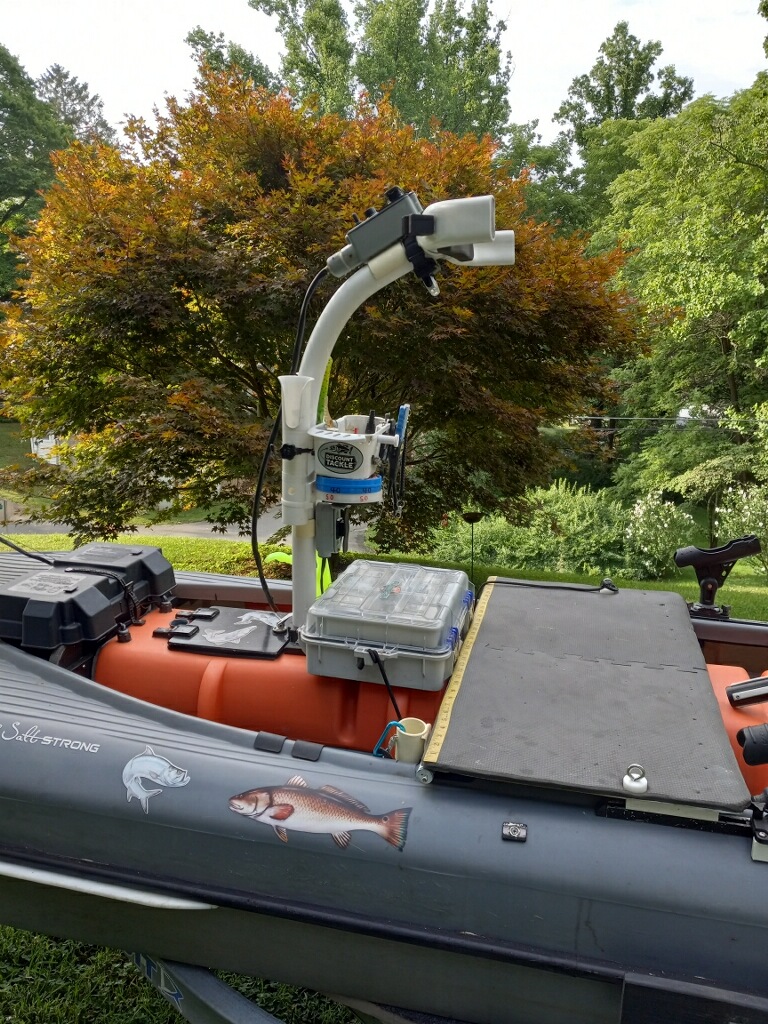
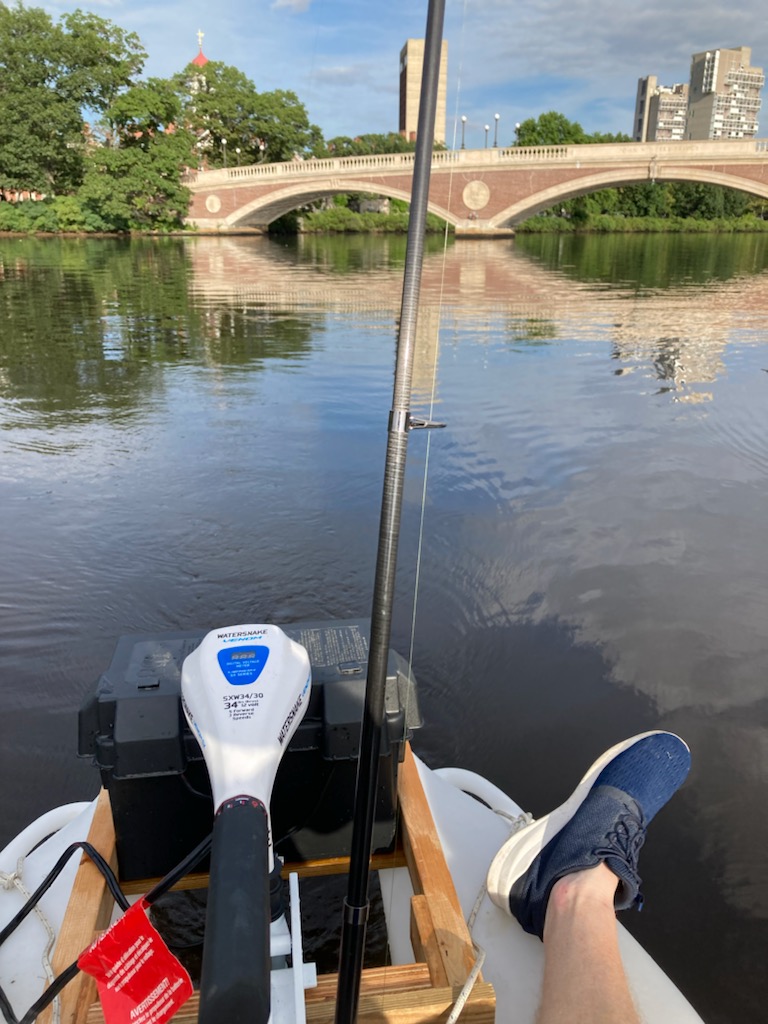
Note the front mounted electric trolling motor

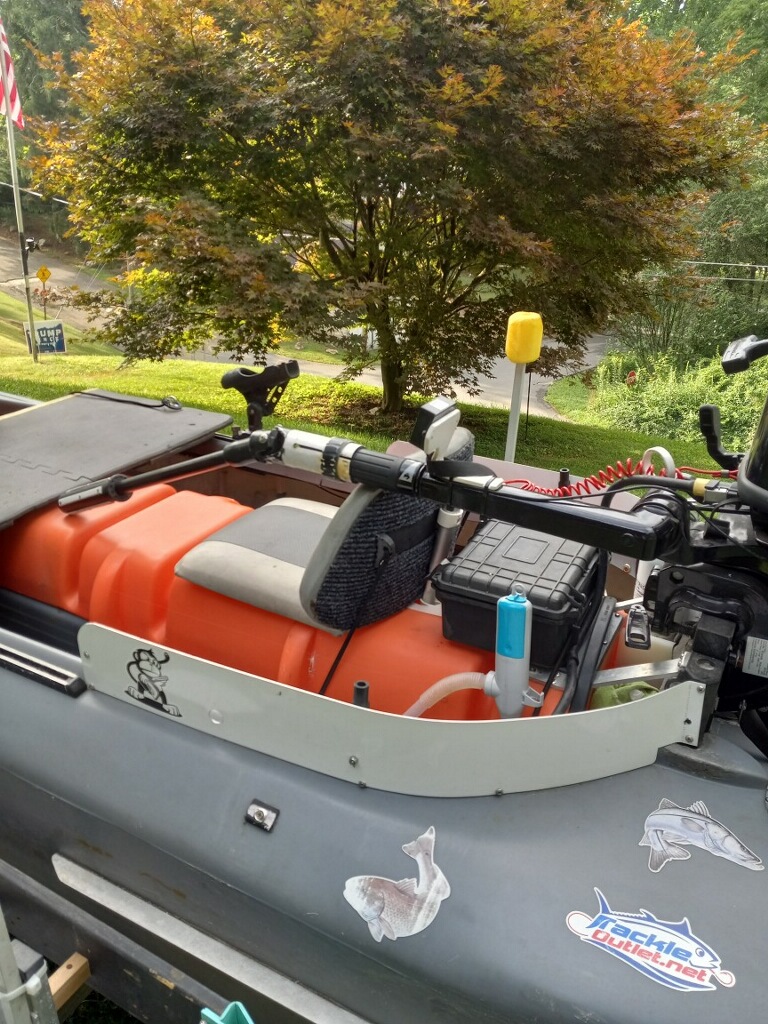
I added a seat and I made a U-jinted tiller extension for the motor.
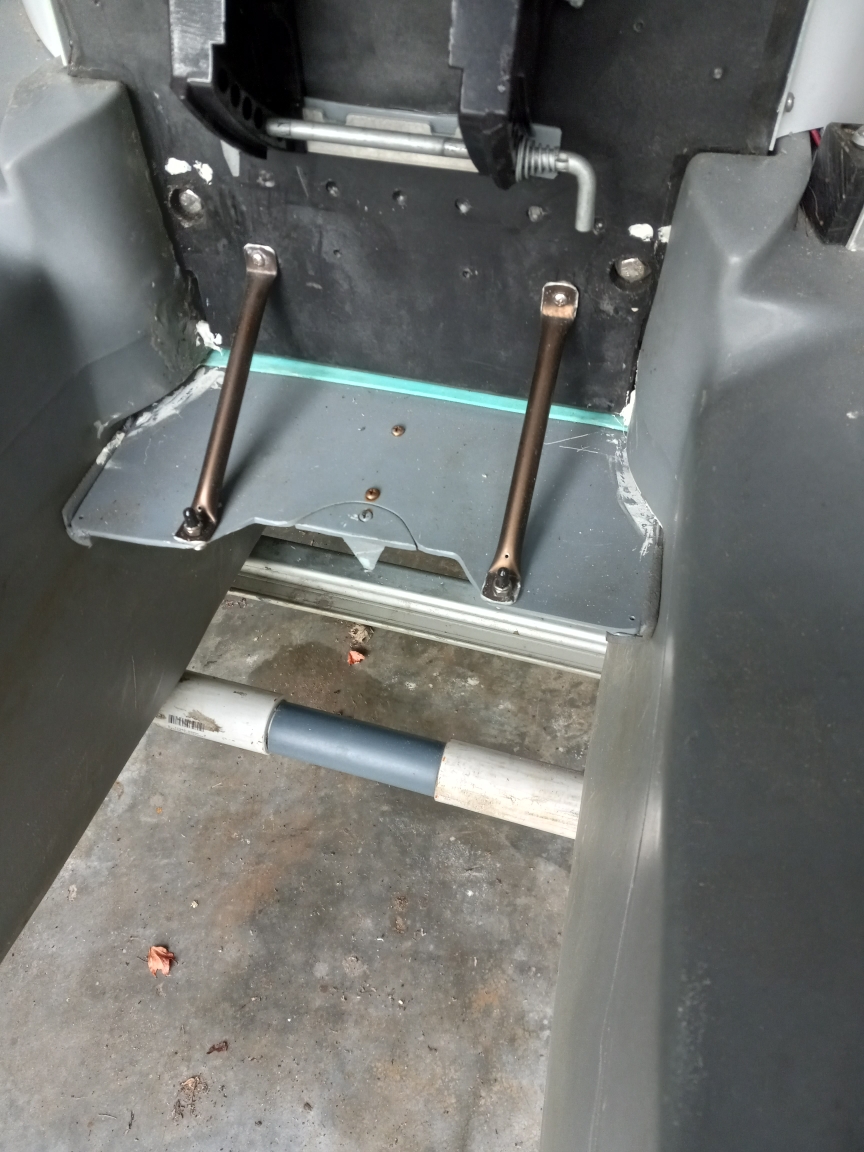
I also reinforced the transom, because this motor is heavier and more powerful than the max 6 HP that Wavewalk recommends.
Seat, articulated tiller extension, and reinforced transom on S4 micoskiff
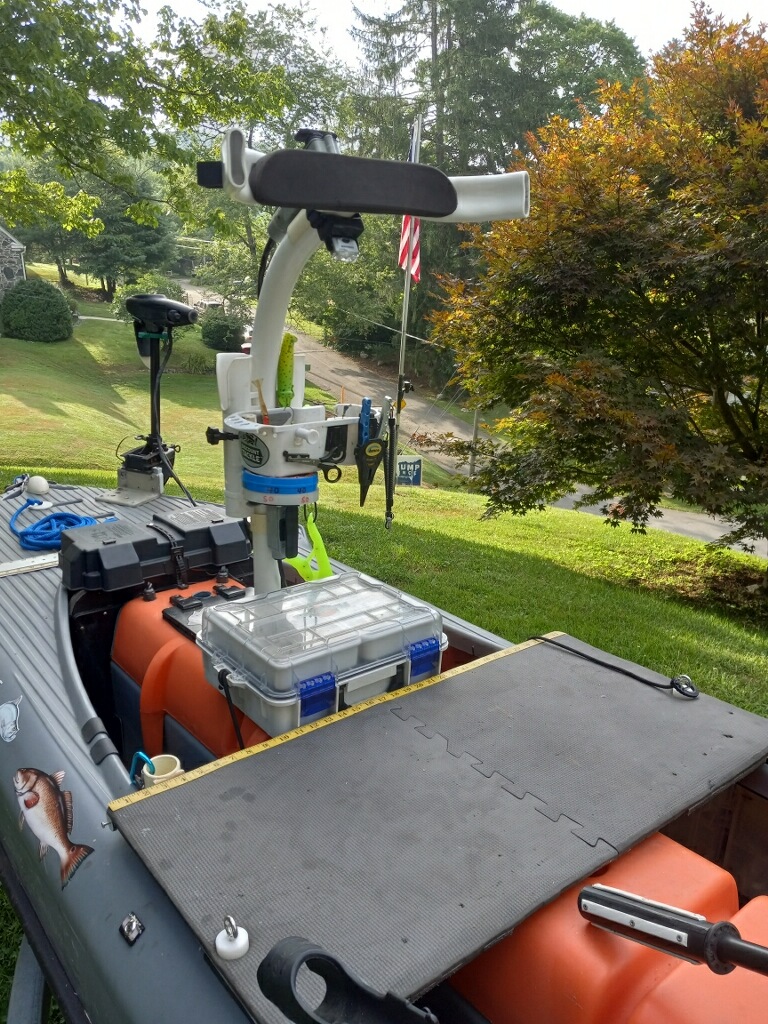
The leaning bar and platform – Leaning bar unlocks and swings away for access to the bow. The platform is 17 inches by 34 and standing that high in the boat is very stable, so stable I can stand on the edge, with my tes stick out.
Casting platform on top of S4 cockpit
Leaning bar for casting platform - Wavewalk S4 microskiff
Standing platform and leaning bar for Wavewalk S4 microskiff
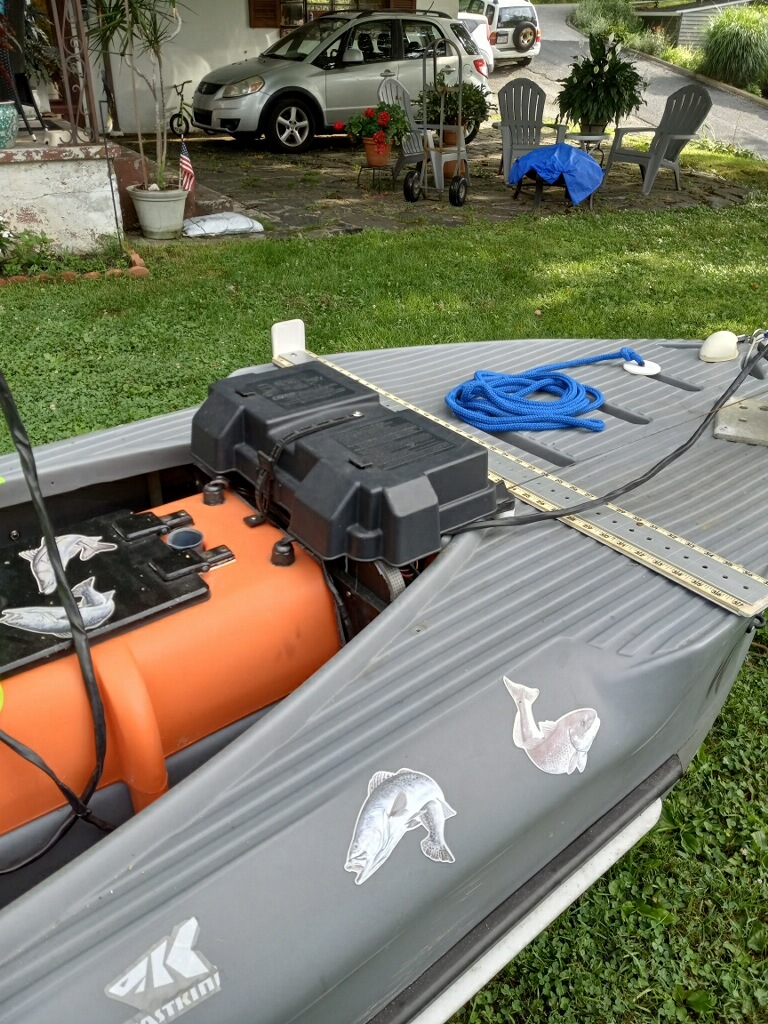
I made a battery compartment  by cutting a section out of the floatation seat and plastic welded an end back in. I also installed another saddle bracket that the modification eliminated.
Electric batteries compartment in the S4 microskiff
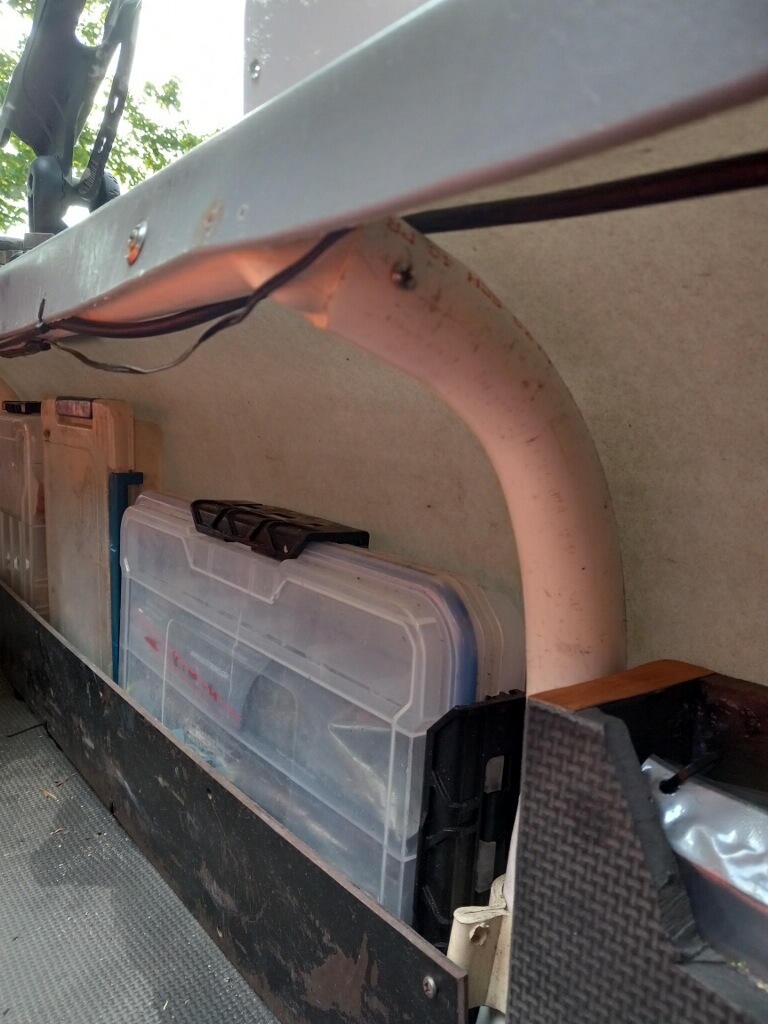
And this is a storage compartment on the side of the hull –
Storage compartment on the side of the S4 microskiff hull
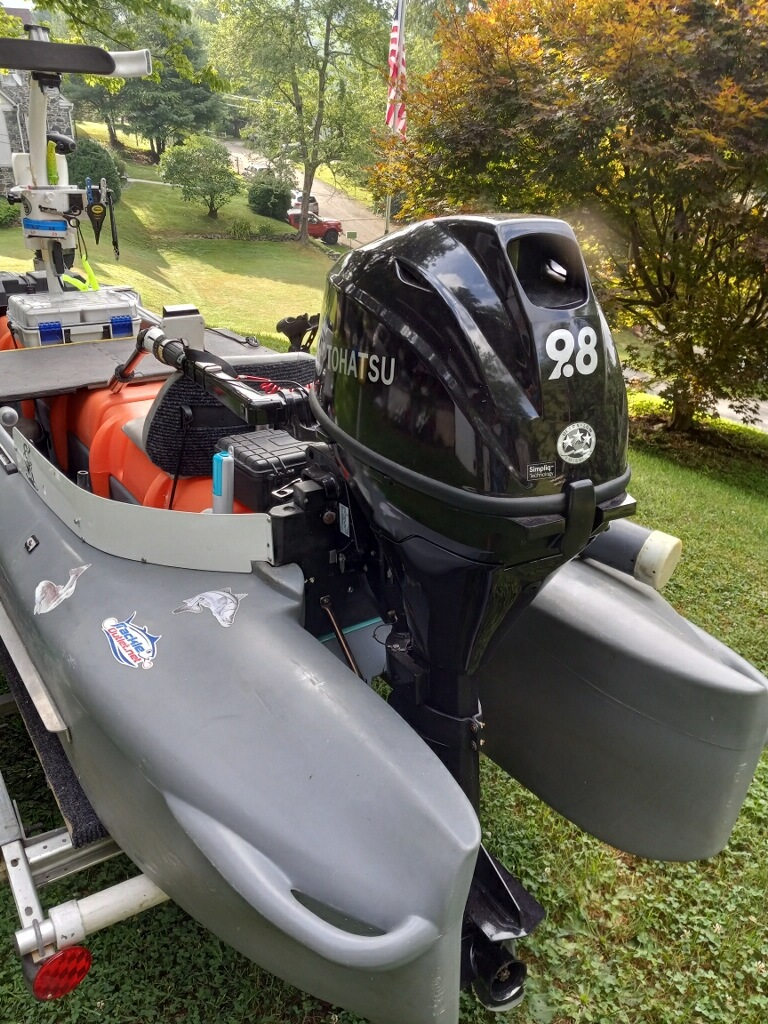
This is the transom saver for transporting the boat. The 9.8 is a heavy  motor and the vibration and stress in transport is another factor for reinforcing the transom –
9.8 HP Tohatsu outboard mounted on Wavewalk S4 microskiff
The propeller pitch is 7 which came with the motor. I also have a 9 pitch and only gained 2 tenths and the rpms dropped about 475 rpms. As you can see from the pictures I have added a lot of weight to this boat.
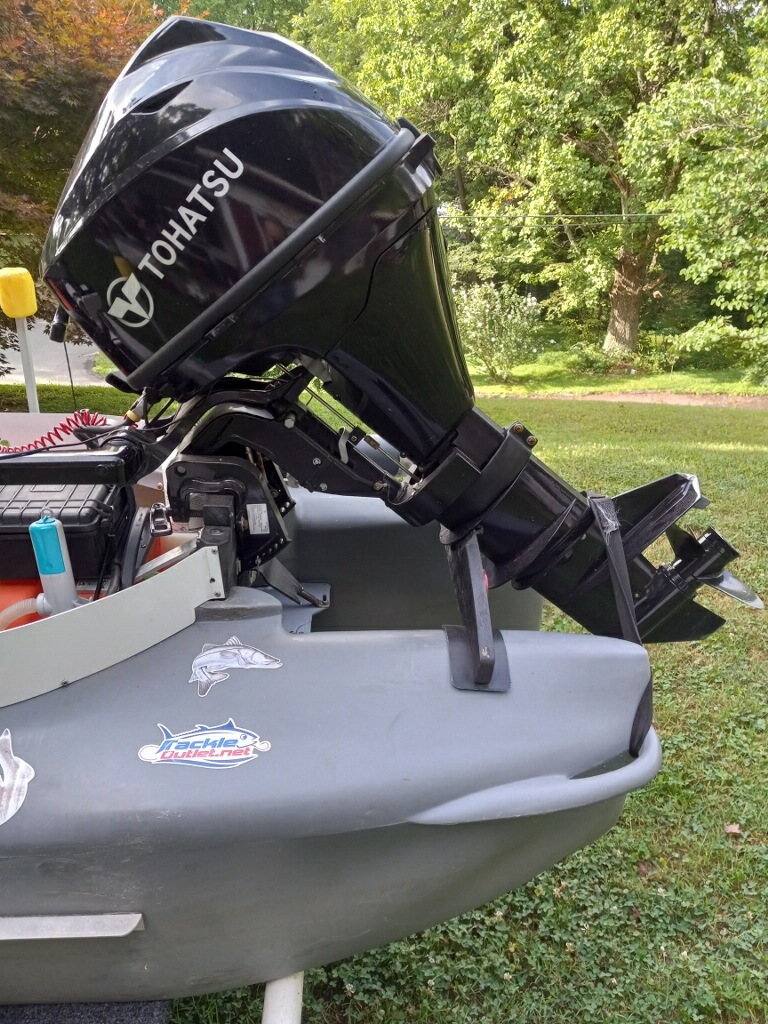
9.8 HP Tohatsu outboard motor on S4 microskiff
The speed I get is 16-17 mph using GPS. Conditions have to be really good to  hit 17, and I once did 18 mph for a brief period of time.
Tohatsu 9.8 HP outboard motpr mounted on Wavewalk S4 microskiff
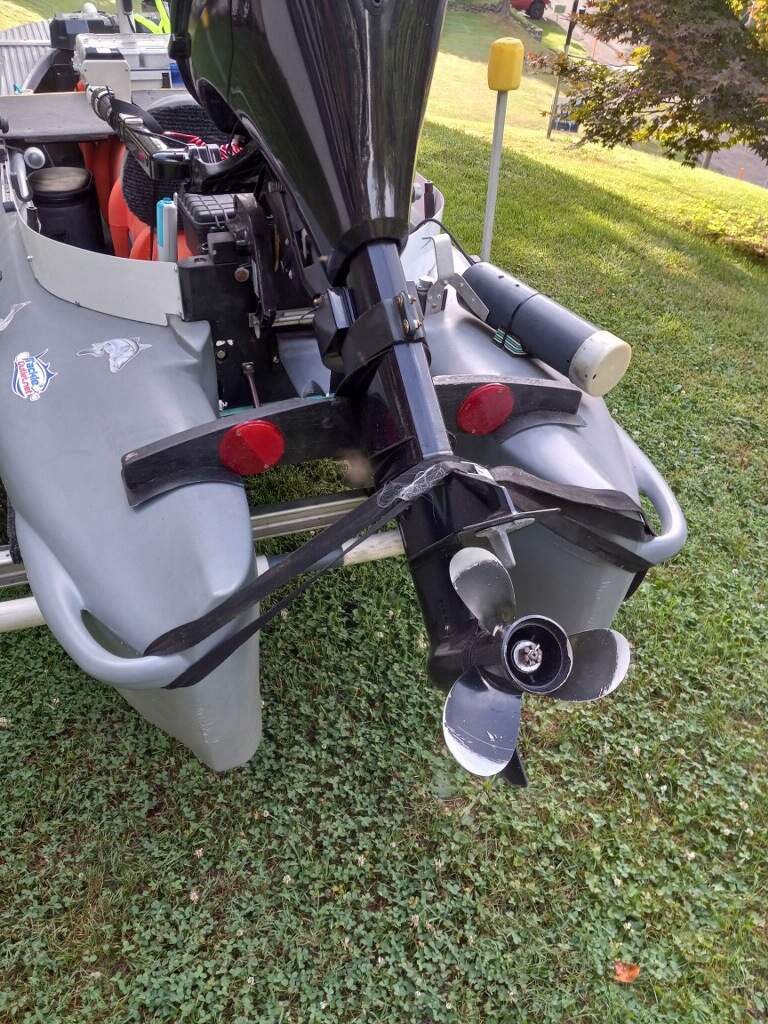
This motor weighs 84 lbs, which is over 20 lbs more than a 6 HP, so I had to trim it very aggressively, and add a trim tab to keep the bow low and the stern high –
Trim tab for outboard motor mounted on S4 microskiff

Wheel cart for portable boat, kayak-skiff, and cartop microskiff

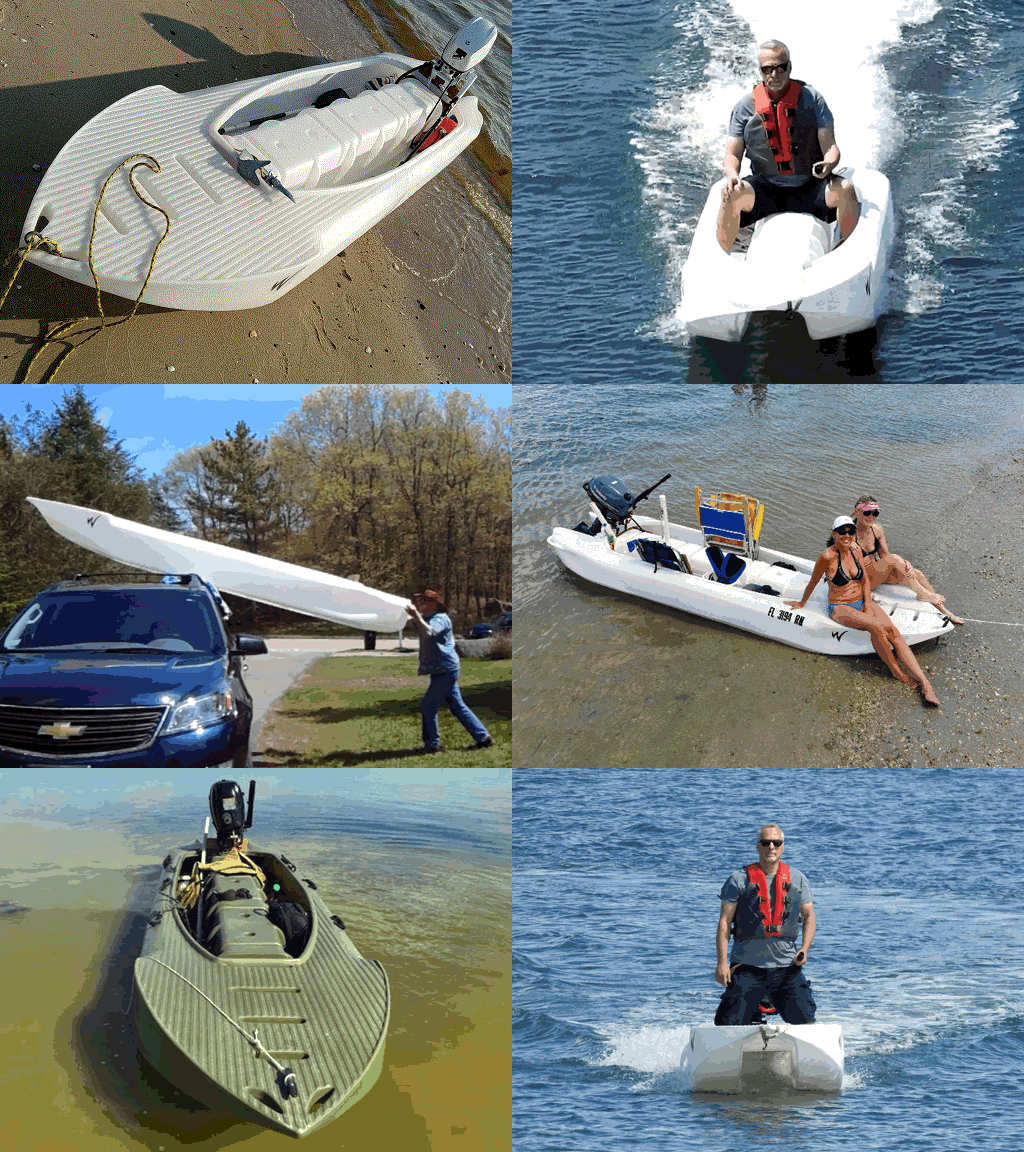
This article offers suggestions for making a wheel cart for your kayak, portable boat, kayak-skiff and cartop microskiff from the W700 and S4 series.

This article offers suggestions for making a wheel cart for your kayak, portable boat, kayak-skiff and cartop microskiff from the W700 and S4 series.

Sadly, we haven’t found a commercially available canoe or kayak cart that we like.

There is no perfect wheel cart for a portable boat, or a cartop  microskiff, because the requirements from such a device can vary greatly, depending on the weight of the boat (motorized or non-motorized), the terrain on which it needs to be carried, and whether there is a need to transport the wheel cart on board the vessel.
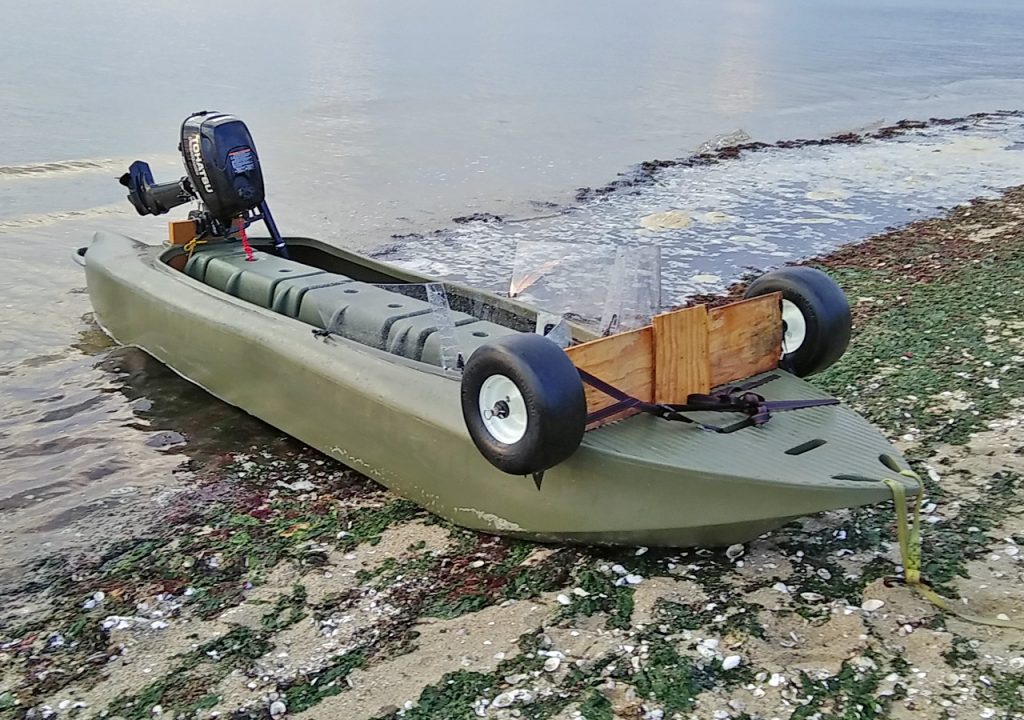
All terrain wheels for an S4 portable boat
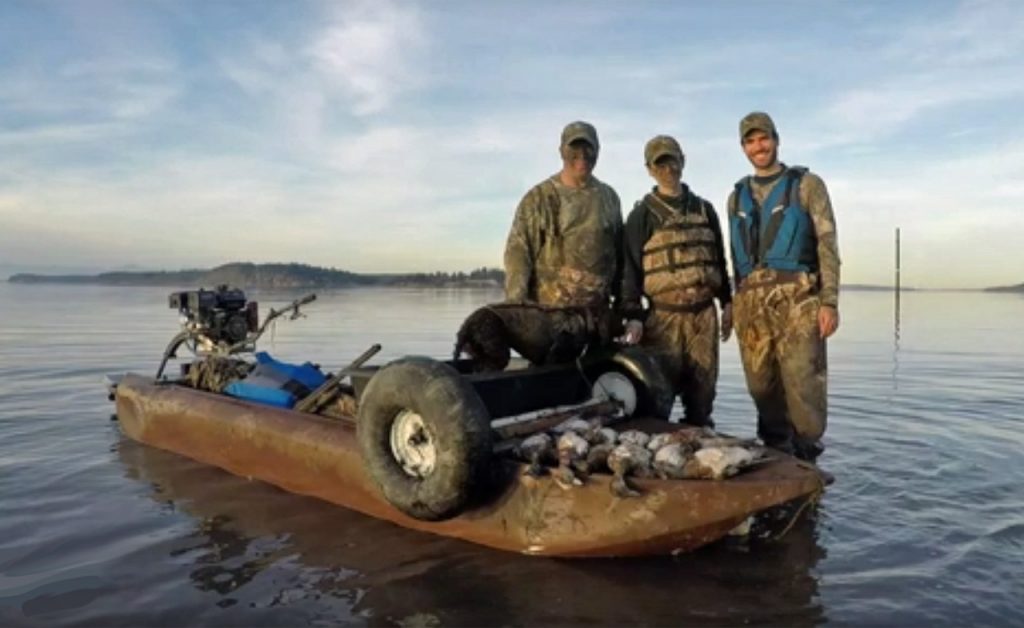
Chris Henderson and his team with their S4 and a pair of XL inflatable wheels, Puget Sound, WA

General guidelines

These recommendations are valid for all types and sizes of wheel cart, regardless of boat model, and of the weight it carries. Whether you need to carry an empty W720 that weighs just 80 lbs, or a 100 lbs S4 outfitted with a 60 lbs 6 HP outboard motor, which brings the total weight of the boat to 160 lbs even before you load it with your fishing gear, you want your wheel cart to be sturdy and stable, and make it as easy as possible for you to go on whatever terrain you need to travel on.

Simple is Best

The wheel cart design we recommend is robust as well as easy to make, even if you’re not an expert carpenter. It’s also inexpensive and durable. This design consists of a 2×4 or 2×6 lumber, a steel axle, a pair of wheels, and two latches. The axle is attached directly to the underside of the lumber “body” on which the boat rests. The wheels are mounted on both sides. The boat is attached to the wheel cart body by means of two latches.

Dimensions
  • Length of the lumber body: 35″ for the W720, and 42″ for the S4. This means a 2″ clearance on each side.
  • Lumber size: 2×4 for a non-motorized W720 and S4. 2×6 for a motorized W720, and S4. This means you upgrade from 2×4 to 2×6 if the total weight of the boat plus its motor is equal to or exceeds 100 lbs.
  • Waterproofing: Wood rots and steel rusts, so we recommend coating all parts of the wheel cart with 2 coats of urethane.
  • Wheel diameter: Minimum 12″, even for flat and even terrain. This requirement has to do with the size of the boat, and the clearance from the ground. For very rugged terrain, such as trails in the woods, don’t hesitate to use 20″ diameter wheels.
  • Wheel width: Minimum 2″, even for flat and even terrain, and pavement. Minimum 6″ for sand.
  • Type of tires: Flat free. The last thing you want when you’re out there is a flat tire, and not having a spare tire…
  • Wheel material: Plastic is lighter than steel, and it doesn’t rust.
  • Steel axle: Minimum diameter 5/8 for lite duty wheel cart, and minimum 3/4 for heavy duty one. Stainless lasts forever but it’s more expensive. Remember to make the axle long enough!
  • Attaching the axle under the wooden body: Anything goes, from plumbing brackets to simple nails bent with a hammer, pieces of wood, etc. Build strong!
  • Attachment points for the latches: You can drill a pair of narrow holes on each side of the lumber body, or outfit it with O screws fore and aft. Preferably, keep the biggest distance between the two attachment points, in order to minimize torsional movement when you’re pulling the boat.
  • Latches: Preferably wider than 1″. Ratcheting latches are overkill.
  • Where to attach the wheel cart to the boat: The optimal spot for the wheel cart is right below the boat’s vertical mounting plate, because this location provides means to secure the latches more effectively, and prevent slipping. If this spot is not convenient (e.g. due to weight distribution), any spot between the middle of the boat and the rear end of the cockpit is fine.
  • Carrying the wheel cart on board: The two pictures in this article show the preferred way to do it. For the S4, adding a transversal piece of wood in the middle of the cart can help keeping it in place if rough waters, by inserting this element into one of the vertical slots in the boat’s front deck.
No wheels, sled style

If your W720 or S4 are non-motorized, and you don’t carry heavy gear on board, and the surface on which you’re carrying the boat isn’t abrasive (e.g. grass, sand, pebbles), consider dragging the boat sled-style, with no wheels. It can make things simpler and easier, and it won’t necessarily damage the boat.

Central beam, if you can leave the wheel cart on shore

A central beam is attached to the middle of the wheel cart, and it stretches forward along the center line of the boat. The front tip of the beam is attached to the tip of the boat’s bow (S4) or bows (W720).
Pulling a boat that’s attached to such enhanced wheel cart is easier, because the beam helps keep the wheels going straight forward, and not sideways, as they might tend to do if they’re not attached properly. This full fledged cart is too big to take on board your vessel, so this solution works only for users who can leave their cart on shore after they’ve reached the water.

Do you have any questions for us?

Click to send us an email Click to send us a text message Click to call us


Toggle Bolts for attaching items to your boat and kayak

Kayaks and ultra lightweight boats such as the S4 are molded from Polyethylene (PE), which is a relatively soft but very strong material. In order to reduce both weight and cost, the walls of these small craft are made thin, which presents a challenge as far as permanently attaching objects to them. Such object can be carry handles, rod holders, seats, etc. Screws don’t work in such cases due to the thinness of the walls, and bolts don’t work if there is no access to the other side of the wall, in order to apply the nut in its place on the tip of the bolt.

The typical solution, which works in most cases, is to use special rivets that were developed for soft walls. These rivets split into three arms that fold back into the surface of the other side of the wall, and they are the standard rivets used in kayaks and small craft.
See article on watertight riveting »

But these rivets are relatively small, and sometimes they’re not enough. In such cases, Toggle Bolts provide a sturdy and easy to apply solution – Toggle Bolts were initially developed for hollow gypsum drywall. Gypsum boards are thick, but gypsum is a very soft, brittle and weak material, too weak to resist pull from screws. The problem of softness and lack of access to the other side of the wall required an ingenious solution, and toggle bolts are without any doubt a most ingenious invention.

Toggle Bolts for kayaks and small boats
A toggle bolt is a two-piece, steel fastener. Its two parts are a bolt and a spring-loaded pair of steel wings that fit on it –
You just drill a hole in the wall in the diameter indicated by the toggle bolt manufacturer, and push the bolt in with its wings folded. After the wings are forced all the way through the hole, they will open up by the action of the spring. Rotating the bolt will cause the wings to get drawn back towards the bolt’s head, and against the wall. Once the wings are pressed tightly against the other side of the wall, they will provide enough support to the equipment that you want to attach to the boat’s wall.
Waterproofing the hole in your boat or kayak can be done by using a generous amount of Goop, which is a watertight adhesive that adheres sufficiently well to Polyethylene walls, enough for such a light duty application. This said, we recommend not to drill holes below waterline, or even close to it. Any hole in the boat should be only drilled only at a safe location.

Do you have any questions for us?

Click to send us an email Click to send us a text message Click to call us